
Why fall and winter: the pup season ends
UC IPM's bat Pest Note says to avoid excluding bat colonies "when flightless young could be present, usually May through September in California," because shutting the parents out starves the young and leads to odor and fly problems. Bat Conservation International gives a similar rule for North America as a whole: don't exclude during pup-rearing season, roughly April through September, and wait until fall or winter when the pups can fly. In practice that makes October onward the start of the usual exclusion window in Southern California, after an inspection confirms there are no flightless young in the roost.
Most colonies thin out in late fall, but not every bat leaves
UC IPM notes that most bats leave buildings in late fall in most areas and that bats may migrate to warmer areas or to hibernation roosts in winter when insects are scarce. Southern California is one of those warmer areas. The Natural History Museum of Los Angeles County says Mexican free-tailed bats from the southwestern U.S. migrate to overwinter in Southern California and Baja California, and that hoary bats spend the winter here. So a quiet attic in December is not proof the bats are gone, and a bat seen in January is not unusual. That is why we inspect before sealing anything, even in winter.
One-way devices still matter in winter
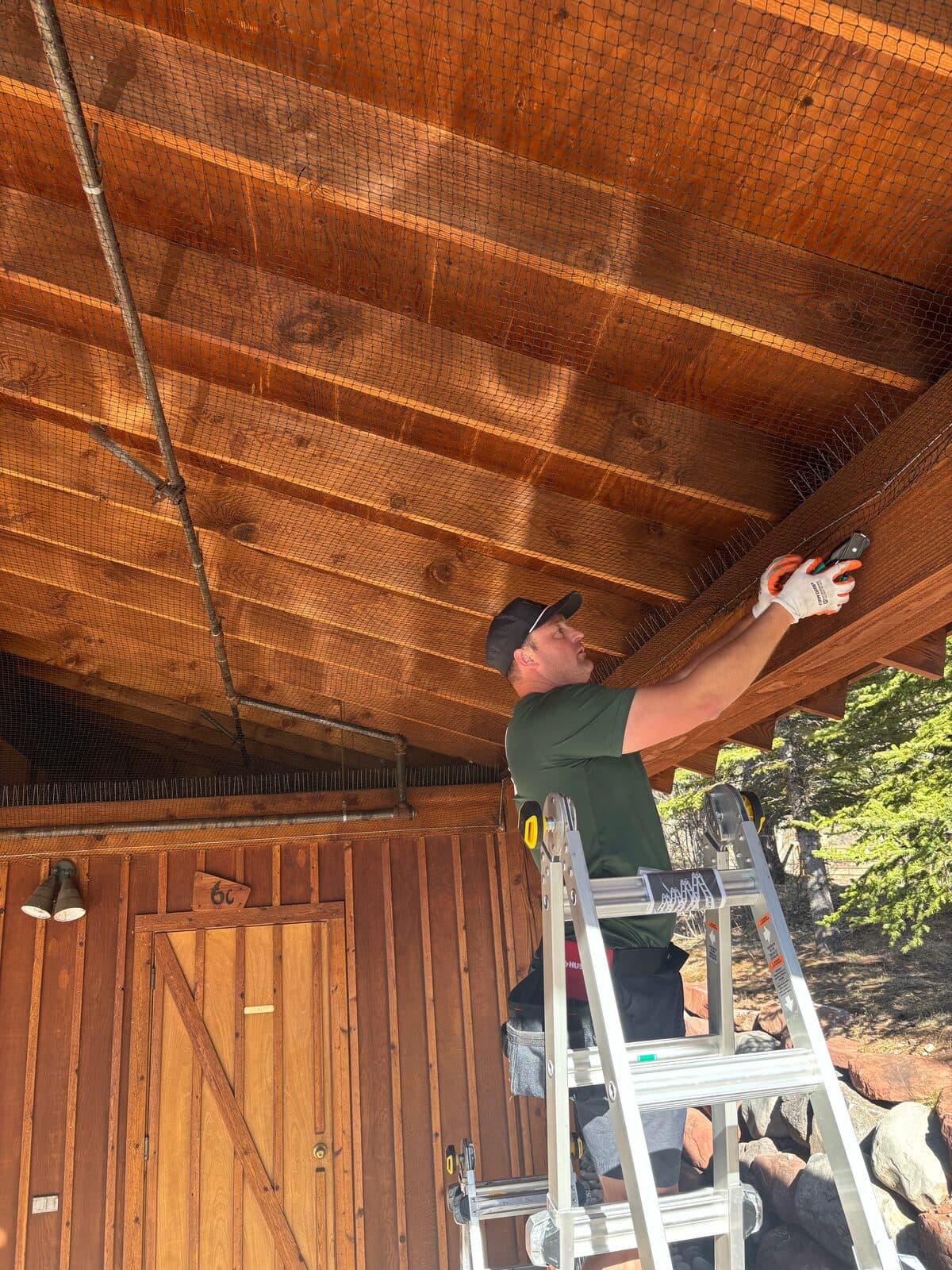
Exclusion means letting bats leave and not letting them back in. UC IPM recommends one-way netting or exit tubes over active openings, left in place for about 7 days before permanent repairs. Bat Conservation International says to leave exit devices up for 7 warm nights and warns never to simply wait for bats to fly out at night and then seal openings, because not all bats leave at the same time. UC IPM also notes that bats can become torpid in cool weather, which is one reason we watch the forecast and schedule device work for stretches of milder nights rather than counting calendar days during a cold snap.
Late summer is the riskiest time for bat contact
Los Angeles County Public Health says only about 1% of bats in nature have rabies, but bats that fly in daylight or come into contact with people and pets are more likely to be rabid, and in the peak months of late summer about 1 in 3 of those bats tested positive in the county. The county reports a record number of rabid bats in 2026. That late-summer peak overlaps with pup season, when colony exclusion has to wait, so fall is often when homeowners who noticed bats over the summer finally book the work. If anyone may have touched or been bitten by a bat, call your doctor and your local public health department first; exclusion comes second.
Finish before spring, and seal it properly
Because UC IPM puts the start of flightless-young season at about May in California and Bat Conservation International uses April for North America, we treat early spring as the practical deadline for colony exclusion and try to finish whole-structure work by March. After the bats are out, the remaining gaps get sealed. Bat Conservation International advises against expanding foam, which can trap bats and breaks down in heat, and L.A. County Public Health reminds residents that it is illegal to keep, injure or kill bats, including when trying to get them out of a house. We use inserts, screening and finishes matched to the roof rather than foam.
What to do now if you noticed bats this year
Book an inspection so the entry points can be mapped while the colony is still identifiable by guano and staining. If pups are no longer present, one-way devices can go up right away; if bats are still active in a mild spell, we work with them rather than against them. A single bat inside the living space is a separate situation from a colony in the attic: follow your county or city public health guidance and don't release a bat that may have touched someone.
Ready for help in Los Angeles, San Diego, or elsewhere in Southern California? Start with bat removal or an attic inspection.