
South Bay / Harbor · California
Bat removal in Long Beach, California
Long Beach is an older city for Southern California: SCAG's local profile, using American Community Survey data, puts about 70% of its housing stock as built before 1970, and the city has designated 18 historic districts, from the Spanish Colonial Revival streets of California Heights to the Craftsman blocks of Rose Park and Belmont Heights. Clay tile ends, open rafter tails, stepped parapets and worn vent screens on those homes are the gaps bats use. In October 2026 the city's Health Department also confirmed Long Beach's first rabid bat since 2014. California Bat Removal Pros inspects Long Beach homes and buildings, removes colonies with one-way exclusion and seals the entry points, with a two-year written warranty.
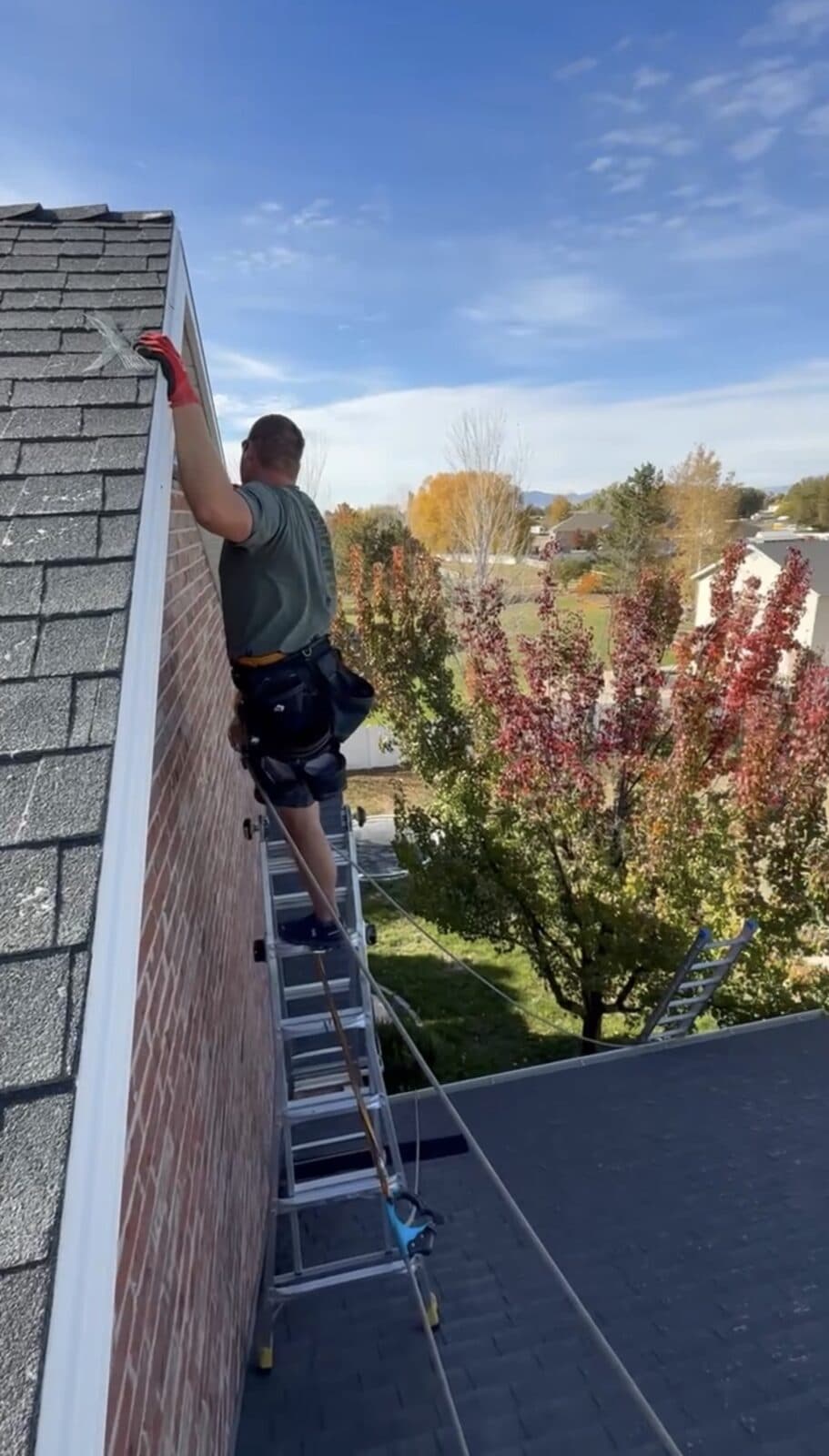
Are there bats in Long Beach?
Yes. The Natural History Museum of Los Angeles County's Backyard Bat Survey, which records bat calls with acoustic detectors in residents' yards, says its current phase covers a gradient of sites across southern L.A. County, including San Pedro, Torrance, Carson and Long Beach. The museum's Bat Roost Count sends community scientists to count bats leaving day roosts at dusk, with a focus on the L.A. River and the San Gabriel River, the two rivers that reach the ocean at Long Beach's west and east edges. The museum says the Mexican free-tailed bat, the most common bat in the L.A. area, has turned up at every survey location that detected any bats. Most residents only notice bats when droppings, an ammonia smell or a dusk fly-out shows up at their own roofline.
The museum has not published a separate species list for Long Beach. The species below are the ones the museum describes for urban L.A. County, and a bat being recorded on a detector does not mean it lives in houses. Which bat is in a particular roof is confirmed at inspection.
October 2026: first rabid bat in Long Beach since 2014
On Oct. 2, 2026, the Long Beach Department of Health and Human Services announced that a bat found in the city had tested positive for rabies at the Long Beach Public Health Laboratory on Sept. 30. The department said rabid bats are detected in Los Angeles County every year, but this was the first positive detection in Long Beach since 2014. Its advice: never touch a bat or let pets near one. If you find a bat in or outside your home, especially near a sleeping person, child or pet, don't touch it or release it; if it can be done safely, cover it with a box or container and call Long Beach Animal Care Services at 562-570-7387 (24/7) for collection and testing. If anyone was bitten, scratched or may have had contact, wash the area with soap and water and get medical care right away. Questions about rabies and possible exposures go to the department's Communicable Disease Surveillance and Control line, 562-570-4302. Long Beach has its own city health department, so residents call these city numbers rather than L.A. County Public Health. The state's provisional 2026 rabies table, through Oct. 14, lists Long Beach separately from the rest of L.A. County, with one rabid bat.
Bat species documented in urban L.A. County
- Mexican free-tailed bat (Tadarida brasiliensis): The most common bat in the L.A. area according to the museum, recorded at every Backyard Bat Survey location that detected bats. The museum says populations from the southwestern U.S. migrate to overwinter in Southern California. It roosts in colonies, often in tight, hot gaps such as the open ends of clay roof tiles.
- Canyon bat (Parastrellus hesperus): The smallest bat in the L.A. area and the second most commonly detected species in the museum's surveys. It comes out early in the evening with a fluttery, butterfly-like flight.
- Yuma myotis (Myotis yumanensis): Strongly tied to rivers and other water, according to the museum, and known to roost in buildings, under bridges and in other human-made structures. The lower L.A. and San Gabriel rivers are the kind of habitat it uses.
- California myotis (Myotis californicus): One of the more commonly detected bats in the museum's surveys, associated locally with riparian areas such as the L.A. River.
- Big brown bat (Eptesicus fuscus): A well-known building bat across North America. The museum notes it has shown up in L.A. backyard surveys less often than expected.
- Hoary bat (Lasiurus cinereus): A tree-roosting migrant that the museum says spends the winter in Southern California. It roosts in foliage, not attics, so it is rarely the cause of a building problem.
More detail: California bat species guide.
Where bats get into Long Beach's tile and Craftsman homes
Long Beach has 18 city-designated historic districts, and their descriptions read like a list of bat entry points. The city describes California Heights as its largest historic district, with nearly 1,500 homes, mostly Spanish Colonial Revival houses from the 1920s boom era. Bluff Park, along the ocean bluffs on Ocean Boulevard and 2nd Street between Junipero and Loma avenues, is made up of large two-story Craftsman bungalows and Period Revival homes built between 1903 and 1949. Rose Park's Craftsman bungalows have medium- to low-pitched gable roofs, Brenner Place's 1923 cottages have red tile shed roofs, and Wilton Street's 1924 homes have flat roofs with stepped parapets. Citywide, SCAG's local profile puts about 70% of the housing stock as built before 1970. UC IPM lists the usual colony entry points as beneath eaves, around chimneys, around air and plumbing vents, near loose boards and beneath roof caps, and says bats can be kept out of Spanish tile roofs by filling the open tile ends with tightly fitted bird-stop strips. On Long Beach homes we check first:
- Open or broken bird stops at the eave line of clay tile roofs, common on California Heights' Spanish Colonial Revival homes
- Ridge and hip tile ends, and gaps where tile meets stucco walls or parapets
- Exposed rafter tails, open soffit bays and gaps behind wood siding and trim on Bluff Park and Belmont Heights Craftsman homes
- Gable and attic vents with torn or missing screens
- Chimney chases and flashing on older homes
- Parapet caps, coping and expansion joints on flat-roof homes such as Wilton Street's and on apartment and commercial buildings downtown and near the harbor
When bats are most active around Long Beach
- Spring and summer
- UC IPM says female bats form colonies in spring to give birth and raise their young, and that flightless young may be present usually from May through September in California. This is when roosts in buildings are busiest, and when colony exclusion should wait.
- Late summer rabies peak
- The Long Beach Health Department, citing Los Angeles County Public Health, says about 17% of bats encountered by people or pets in L.A. County have tested positive for rabies in recent years, rising as high as 33% in late summer. That figure is for bats that came into contact with people or pets, which are more likely to be sick; it is not the rate for bats in general.
- Where Long Beach bats feed
- The museum's Bat Roost Count focuses on the L.A. River and San Gabriel River, which bracket the city. On the east side, the city's El Dorado Nature Center covers 105 acres between the San Gabriel River and the 605 Freeway, with two lakes, a stream and wooded areas. Water and insects like these keep bats foraging close to the east-side neighborhoods around El Dorado Park.
- Fall and winter (the usual exclusion window)
- UC IPM notes that most bats leave buildings in late fall in most areas, which makes winter a good time for exclusion. Long Beach winters are mild, and the museum says Mexican free-tailed bats overwinter in Southern California, so a fall or winter bat here is not unusual. L.A. County Public Health reminds residents that it is illegal to keep, injure or kill bats, including when trying to get them out of a house, so we use one-way devices rather than sealing a roof shut.
Planning an exclusion? See our fall and winter bat exclusion guide, the maternity season guide or the bat eviction season checker. For what California law allows, read are bats protected in California?
Nearby city pages: Lakewood bat removal, Cerritos bat removal, Los Angeles bat removal, Torrance bat removal, Downey bat removal, Huntington Beach bat removal, Anaheim bat removal, Seal Beach bat removal, Cypress bat removal. If your home is in one of Long Beach's designated historic districts, check with the city's Historic Preservation office (562-570-6194) before visible exterior changes; our exclusion work uses inserts and finishes matched to the original tile and wood.
Sources
- Natural History Museum of L.A. County: Backyard Bats and Bat Roost Count
- City of Long Beach Health Department: Rabies-Positive Bat Confirmed in Long Beach (Oct. 2, 2026)
- City of Long Beach: Historic Districts (California Heights, Bluff Park)
- UC IPM Pest Notes: Bats
- L.A. County Public Health, Veterinary Public Health: About Bats
- City of Long Beach Health Department: Animal Bite Reporting (rabies risk levels, PEP)
- Long Beach Animal Care Services: Wildlife
- City of Long Beach: Seal Beach departs Long Beach Animal Care contract (2023)
- City of Long Beach (Legistar): Animal care services agreement with the City of Cerritos
- City of Long Beach: El Dorado Nature Center
- SCAG: Local Profile, City of Long Beach (housing type and age)
- U.S. Census Bureau QuickFacts: Long Beach city, California
- CDPH: Reported Animal Rabies by County & Species, 2026 (provisional)
- L.A. County Public Health: Health Advisory, Significant Increase in Rabid Bats (Sept. 4, 2026)
- CDC: Preventing Rabies from Bats
- CDFW: Human-Wildlife Conflicts, Bats
- UC IPM: Bats (home and landscape)
- Bat Conservation International: Bats in Homes & Buildings
Long Beach roof types & where bats get in
Craftsman and Spanish-style bungalows in Belmont Heights and Bluff Park, postwar stucco tract homes in East Long Beach and Lakewood Village edges, and older brick and flat-roof commercial buildings downtown.
Entry points we check first on Long Beach homes:
- clay or concrete tile ridge and eave closures (bird stops missing or broken)
- open or loose soffit panels and rafter tails
- gaps behind wood siding, trim and porch roof tie-ins
- parapet caps, coping and expansion joints on flat or low-slope roofs
- gable and attic vents with torn or missing screens
Bats can fit through gaps of about 3/8 inch (California Dept. of Food & Agriculture vertebrate pest handbook). Not sure? Use our signs-you-have-bats checklist.
Long Beach climate & bat season
Marine air keeps Long Beach milder than inland LA, but salt air and sun break down caulk and foam faster. Bats are most active from spring through fall, with emergence often tied to warm evenings.
Maternity season rules for Long Beach bat exclusion
California treats bats as protected nongame mammals, so they may not be killed, poisoned or trapped. Exclusion is the humane, legal route. UC IPM advises against excluding colonies when flightless young could be present, usually May through September in California, because the parents get shut out and the pups starve inside the walls. We inspect and plan during that window, then exclude once the pups can fly. Fall, winter and early spring are the usual exclusion months. The CDFW bats page covers safety and conflict guidance, and you can report a colony to CDFW. Timing source: UC IPM bats. Guano health: CDC on histoplasmosis.
Planning for this fall or winter? Read our fall and winter bat exclusion guide for California timing, and are bats protected in California? for what the law allows.
Is it safe to evict bats now? Check the seasonLocal housing & attic patterns in Long Beach
About 42% of Long Beach's housing units are single-family detached homes and about 51% are in multi-family buildings, according to SCAG's local profile, so we work on duplexes, courtyard buildings and apartment roofs as often as houses. The city's historic district descriptions show the range. California Heights has nearly 1,500 homes, mostly 1920s Spanish Colonial Revival. Belmont Heights is about two-thirds Craftsman bungalows, with peak construction from 1918 to 1923. Rose Park's Craftsman bungalows (1910–1922) have medium- to low-pitched gable roofs and broad open porches. Wilton Street's 1924 homes have flat roofs and stepped parapets. On tile roofs we check the open ends at the eave and ridge; on Craftsman homes, rafter tails, soffit bays and gable vents; on flat roofs, parapet caps and coping. Salt air near the water also breaks down caulk and foam faster, so we use materials suited to coastal wood and stucco.
Bat seasonality around Long Beach
UC IPM says flightless young may be in California roosts usually from May through September, and L.A. County Veterinary Public Health asks residents not to exclude bats from May through August, so colony exclusion waits for late summer or fall. UC IPM notes that most bats leave buildings in late fall, which makes late fall and winter the usual exclusion window. Long Beach winters are mild, and the Natural History Museum of L.A. County says Mexican free-tailed bats overwinter in Southern California, so we inspect before sealing to make sure no bat is shut inside.
Neighborhoods & landmarks we know
We cover all of Long Beach: California Heights and Bixby Knolls, Bluff Park and Bluff Heights, Belmont Heights, Belmont Shore and Naples, Rose Park, Alamitos Beach and Drake Park/Willmore City near downtown, the Wrigley area, North Long Beach, Los Altos and the east side near El Dorado Park, plus commercial and multi-family buildings toward the harbor and the I-710 corridor. Signal Hill, Lakewood, Cerritos and Seal Beach are next door.
Why hire a local Southern California crew
Long Beach runs its own Health Department and its own Animal Care Services, so the calls are different from most of L.A. County: a bat bite, scratch or exposure goes to the city's Communicable Disease Surveillance and Control line (562-570-4302), and a sick or injured bat goes to Long Beach Animal Care Services (562-570-7387, 24/7 for sick and injured animals). The city's Animal Care Services says it responds to sick and injured wildlife and does not own or control wild animals, so getting a colony out of an attic or wall is a private job. For homes in a historic district, we match inserts and finishes to the original tile and wood, and we document the work for owners, HOAs and property managers.
- Bat specialists since 2011 — bats are our flagship service
- Documented inspection: openings numbered, photographed, primary vs. secondary
- Targeted repair or whole-structure seal (warranty on whole-structure)
- Humane one-way exclusion · maternity timing per UC IPM (usually May–September)
- High-rise / rope-access capacity for elevated buildings
- We finish failed prior jobs—remove old foam and devices
- Two-year written warranty on sealed whole-structure work
- Local owners, California coverage, backed by a multi-state team
Typical Long Beach jobs start with a phone consultation, then an attic inspection, followed by humane exclusion and optional guano cleanup. Commercial properties can use our commercial bat removal program.
Long Beach bat removal FAQ
Long Beach areas & nearby cities
- Lakewood bat removal
Southeast Los Angeles County
- Cerritos bat removal
Southeast Los Angeles County
- Los Angeles bat removal
Los Angeles Basin
- Torrance bat removal
South Bay
- Anaheim bat removal
Orange County
- Cypress bat removal
Orange County
- All service areas
Southern California hub
- Bat removal service
Residential & commercial
- Fall & winter bat exclusion
California exclusion timing
- Are bats protected in California?
Bat laws & legal removal
- Bat eviction season checker
Is it safe to exclude now?
- Signs you have bats
Interactive checklist
- How we work
Process steps
- Warranty
Two-year coverage
- FAQ
Common questions
Bat problems in Long Beach? Let's talk.
Humane exclusion for Long Beach and the surrounding South Bay / Harbor. Two-year written warranty on whole-structure work. Same-day often available across Southern California.