Skip to content
California Bat Removal Pros

Bat education · Species guide

Southern California bat species homeowners and facilities managers encounter

Southern California supports a diverse bat fauna. Only a handful of species account for most attic, soffit, fascia, and chimney calls across Los Angeles, Orange County, the Inland Empire, and San Diego—especially Mexican free-tailed bats, canyon bats, and big brown bats. Others primarily roost in cliffs, trees, or foliage and are less often found indoors; we still cover key species so outdoor foraging is not mistaken for a building colony. California Bat Removal Pros uses humane one-way exclusion consistent with California Department of Fish and Wildlife (CDFW) expectations—never attic poisons.

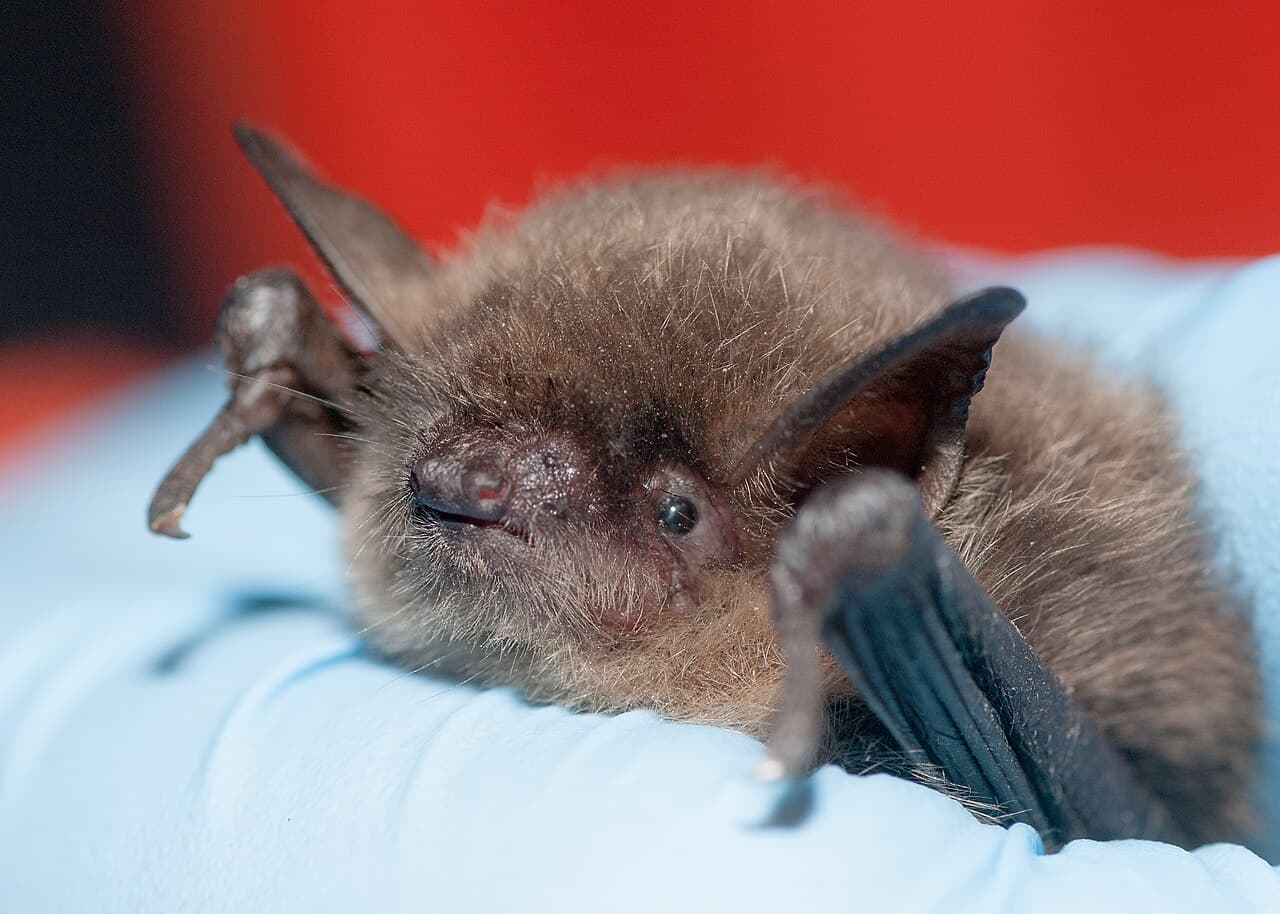
Big brown bat, a species commonly found in Southern California buildings
Bat representative of common Southern California building roost species (free-tailed colonies are frequent in the region)

Photo: Wildlife Specialists field reference library

Mexican free-tailed bat

Very common in SoCal buildings

Tadarida brasiliensis

ID & range in Southern California

Medium bat with long narrow wings and a tail that extends beyond the membrane. Dark brown to gray fur. Abundant across Southern California lowlands and widely associated with bridges, buildings, and large colonies.

Typical roosts

Bridges, buildings, caves, mines, and cliff crevices. Strong site fidelity to warm maternity roosts. Night foraging over washes, golf courses, and urban insect concentrations.

In homes

In homes they use attic ridges, tile gaps, fascia returns, and chimney crowns. Homeowners notice large synchronized dusk emergences, guano under ridge lines, and strong odor after hot days. Colonies can grow quickly when secondary gaps remain open.

In commercial buildings

Warehouses, schools, churches, multifamily roofs, and office parapets are classic free-tailed habitat—expansion joints and mechanical penthouses. Facilities issues include sidewalk guano, tenant fly-ins, and multi-exit colonies that need full envelope mapping before one-way devices.
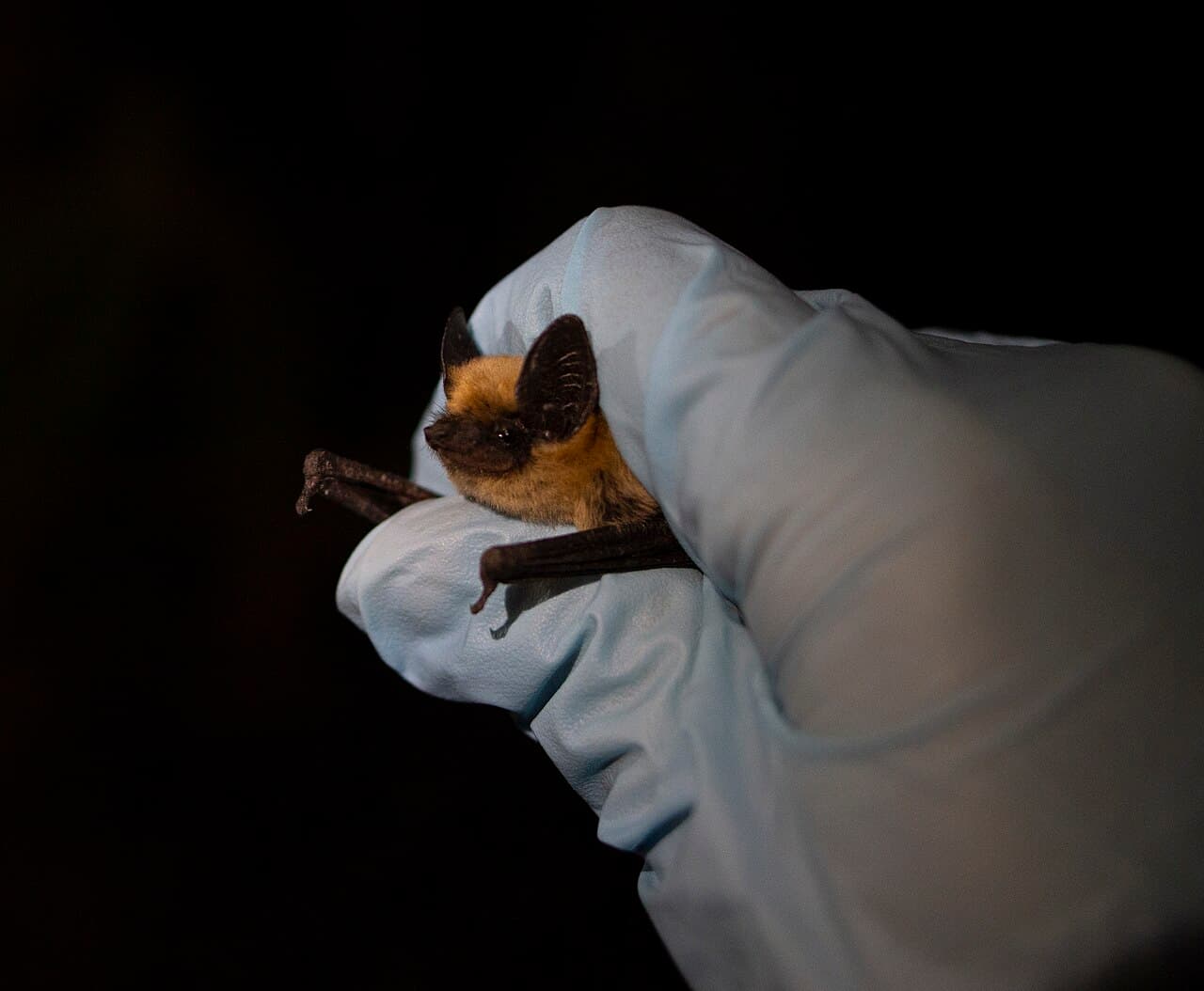
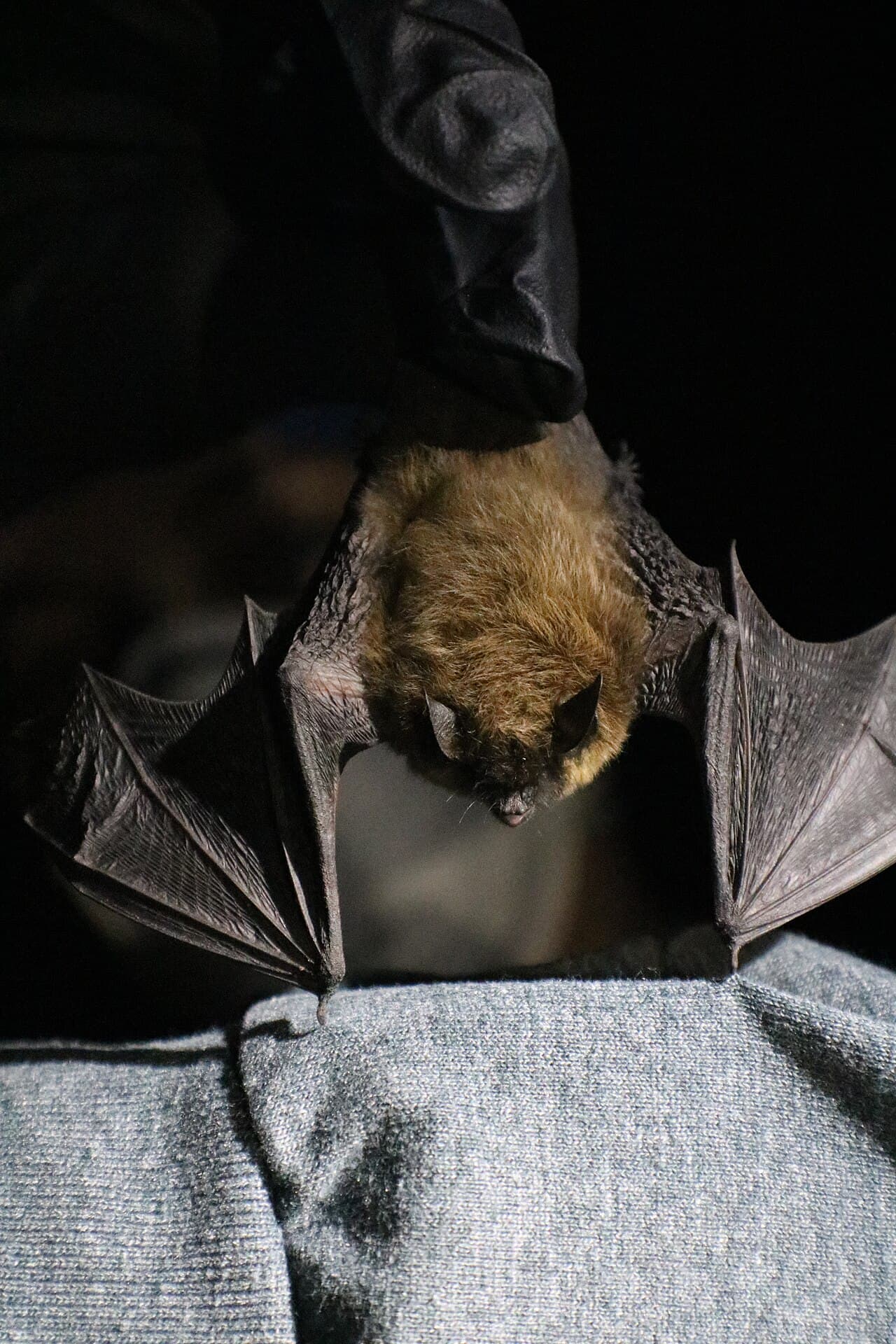
Big brown bat, a common building-roosting species

Photo: Wildlife Specialists field reference library

Big brown bat

Common in buildings

Eptesicus fuscus

ID & range in Southern California

Relatively large bat with glossy brown fur and a broad nose. Widespread across North America including Southern California urban and suburban areas.

Typical roosts

Buildings, bridges, rock crevices, and tree cavities. Maternity colonies frequently use attics and wall voids; individuals may night-roost on porches.

In homes

Big brown bats commonly use older wood attics, chimney areas, and soffit returns in bungalows and Mid-Century homes. Scratching at dusk, guano below ridge lines, and occasional living-space fly-ins are typical calls.

In commercial buildings

Schools, churches, and older commercial attics host maternity groups. Shared envelopes need careful mapping so exclusion does not push bats into occupied rooms.

Canyon bat (western pipistrelle), a small pale bat common in Southern California

Photo: Wikimedia Commons / field reference

Canyon bat (western pipistrelle)

Common; tiny gaps

Parastrellus hesperus

ID & range in Southern California

One of North America’s smallest bats: pale yellowish to gray fur, blunt face, and small size. Widespread across Southern California deserts, foothills, and urban edges; often among the first bats seen at dusk.

Typical roosts

Rock crevices, cliff faces, buildings, and other tight voids. Day roosts may be solitary or in small groups; maternity groups use warm crevices and structures.

In homes

Canyon bats exploit coin-sized and smaller gaps—stucco weeps, cracked fascia, and vent edges. Guano piles may be modest but staining under a single eave line is a classic clue. Easy to miss on a casual walk-around.

In commercial buildings

On commercial masonry and stucco elevations they use weep holes, control joints, and decorative reveals. Incomplete weep covers and foam patches fail quickly in coastal and inland UV—professional mapping and proper covers matter.

California myotis, a small myotis found in California

Photo: Wikimedia Commons / field reference

California myotis

Occasional in buildings

Myotis californicus

ID & range in Southern California

Small myotis with dull brownish fur. Widely distributed in California including Southern California foothills and urban edges.

Typical roosts

Rock crevices, buildings, under bark, and other tight day roosts. Often uses human structures when suitable crevices exist.

In homes

May use small gaps at fascia, vents, and wall transitions. Colonies are usually smaller than free-tailed aggregations, but guano and odor can still accumulate under primary hang sites.

In commercial buildings

On commercial buildings they favor tight crevices and incomplete screens. Mapping still matters—secondary gaps become the next roost once primaries close.

Yuma myotis, often associated with waterways

Photo: Wikimedia Commons / field reference

Yuma myotis

Occasional; often near water

Myotis yumanensis

ID & range in Southern California

Small myotis often associated with rivers, lakes, and other water sources. Present in Southern California where suitable water and roost habitat occur.

Typical roosts

Bridges, buildings, mines, and natural crevices—frequently near foraging habitat over water. Maternity colonies can form in warm building voids.

In homes

Homes near rivers, lakes, or irrigated corridors may see Yuma myotis using attic or soffit roosts. Signs resemble other small myotis: modest guano piles and dusk exits from small gaps.

In commercial buildings

Bridges and waterfront or river-adjacent commercial structures are classic. Facilities work needs envelope mapping plus awareness of nearby forage that keeps colonies returning.

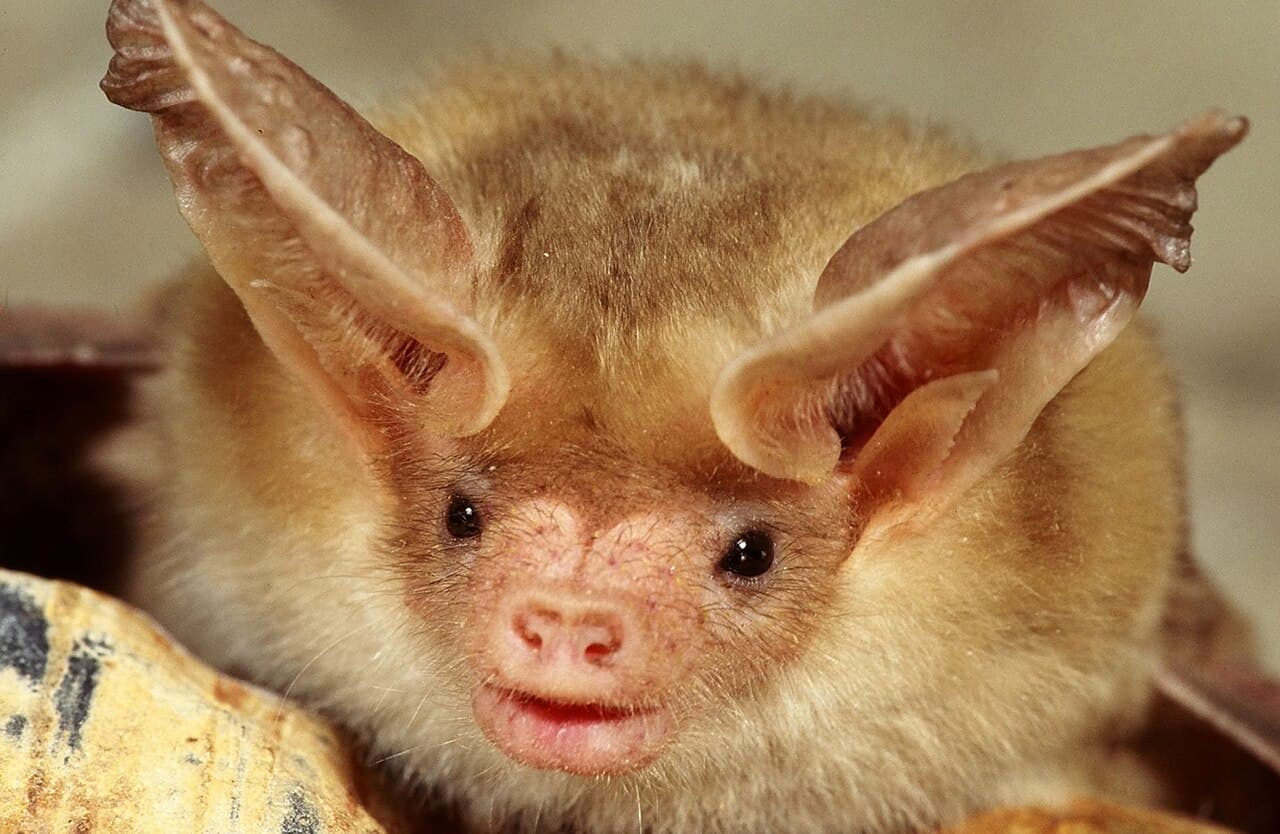
Pallid bat, a large pale bat of open and arid habitats

Photo: Wikimedia Commons / field reference

Pallid bat

Occasional in inland / open areas

Antrozous pallidus

ID & range in Southern California

Large pale bat with big ears and light cream to tan fur. More typical of open and arid habitats; encountered in Inland Empire and other inland Southern California settings.

Typical roosts

Rock crevices, buildings, bridges, caves, mines, and tree cavities. Night roosts on porches and under eaves are common.

In homes

May use attic or eave roosts in inland homes. Homeowners sometimes notice porch night-roosting or guano under eaves even when the main colony is small.

In commercial buildings

Bridges, warehouses, and masonry commercial buildings in inland areas can host pallid bats. Expansion joints and open eaves need proper covers—not sealed weeps that trap moisture.

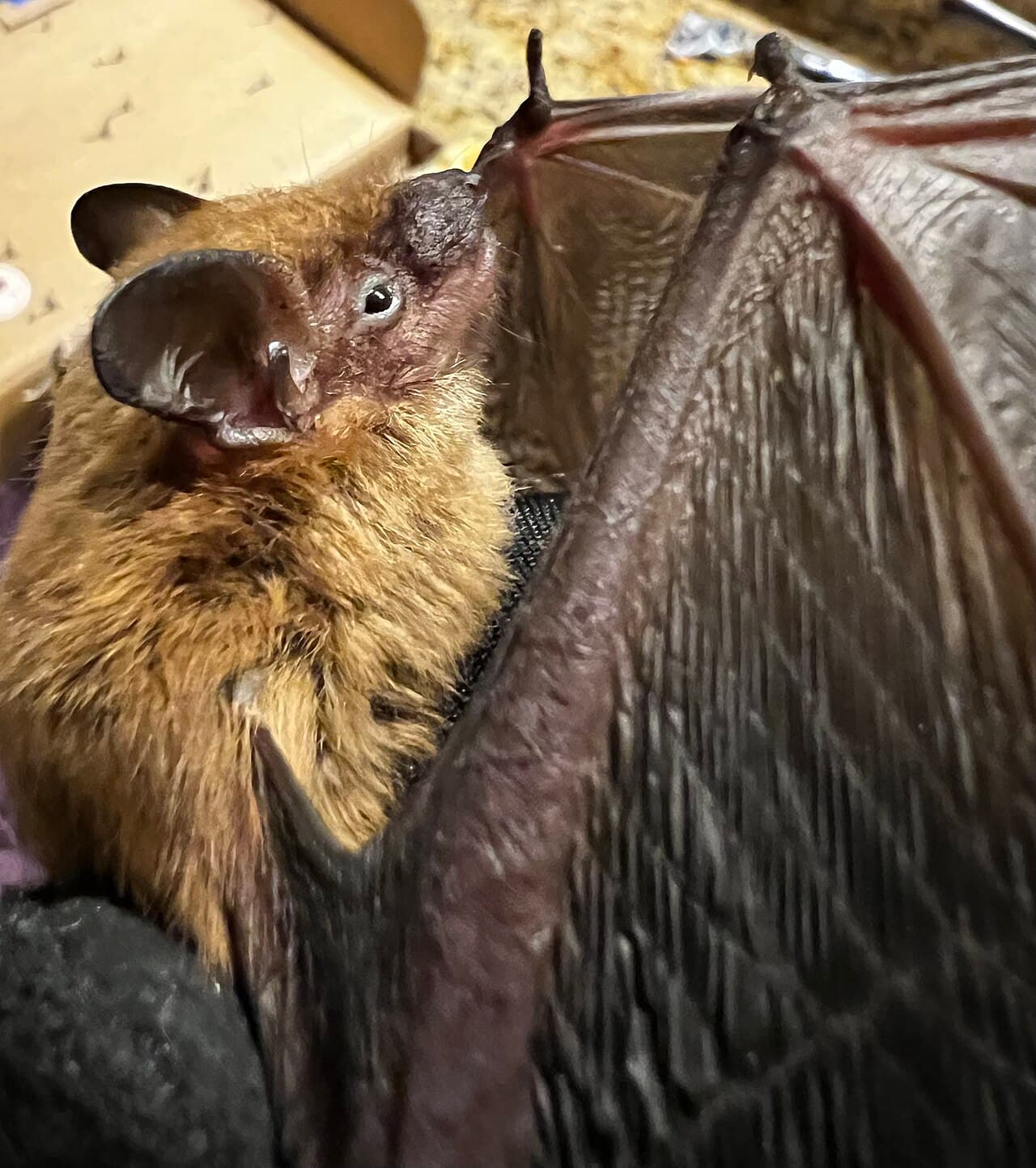
Foliage-roosting bat reference image (western red bats typically roost in tree foliage, not attic colonies)

Photo: field reference library (foliage-roosting bat visual)

Western red bat

Rare in buildings (foliage roost)

Lasiurus frantzii

ID & range in Southern California

Medium bat with reddish to rusty fur. A foliage-roosting lasiurine; more often associated with trees than attics across its western range including California.

Typical roosts

Typically roosts in tree foliage—hanging among leaves rather than in caves or large attic colonies. May be seen near lighted areas while foraging.

In homes

Uncommon as an attic colony species. A bat found on a porch or in a living space may be a fly-in rather than evidence of a building roost—inspection still separates one-off entries from envelope colonies.

In commercial buildings

Rarely the driver of commercial attic exclusions. Landscaping and nearby trees matter more than parapet mapping for this species; building work focuses on true structural roosters when signs point inside.

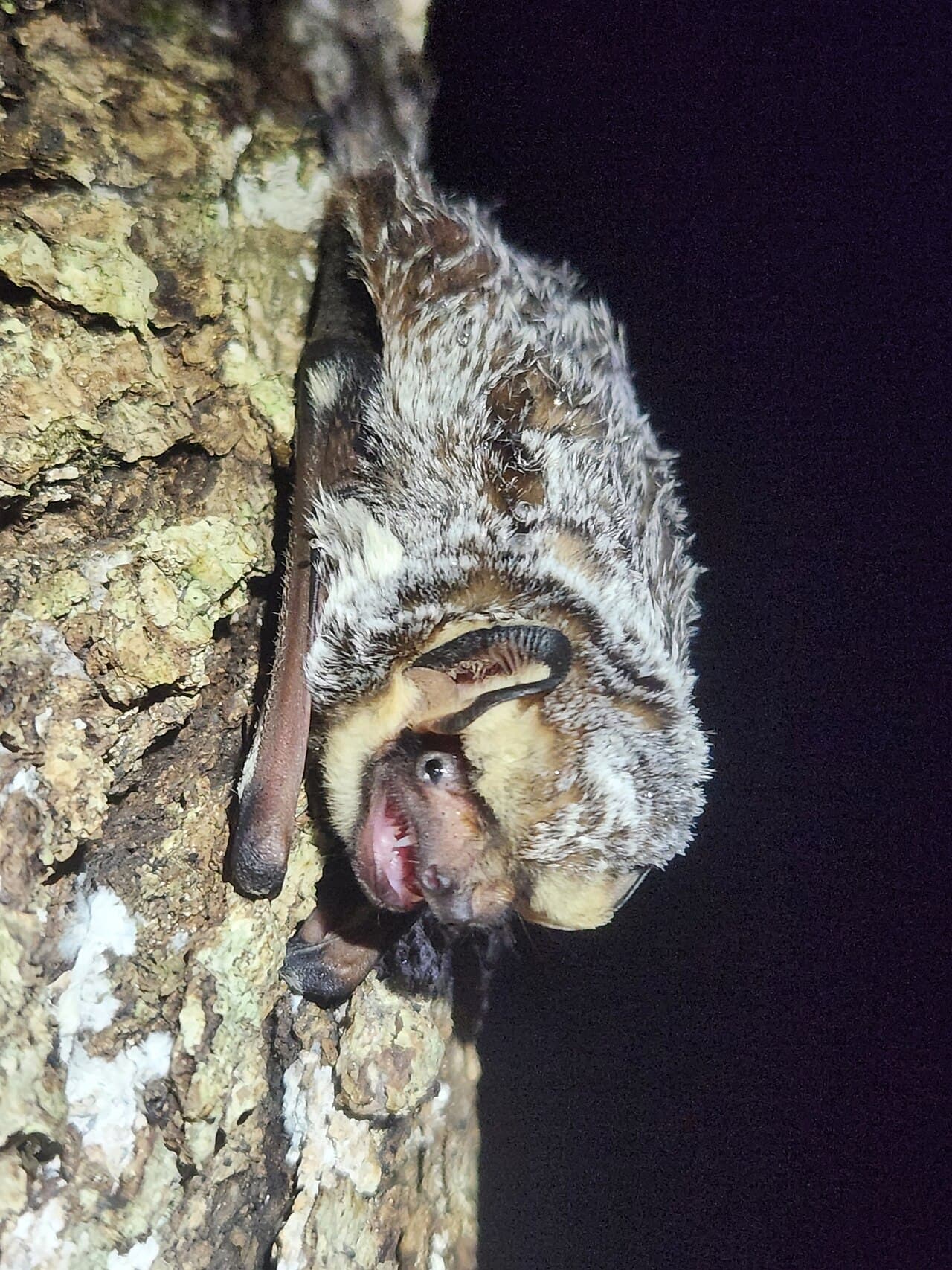
Hoary bat, a large foliage-roosting species

Photo: Wikimedia Commons / field reference

Hoary bat

Rare in buildings (foliage roost)

Lasiurus cinereus

ID & range in Southern California

Large bat with frosted or “hoary” fur tips. A migratory foliage rooster found across much of North America including California.

Typical roosts

Tree foliage is the typical day roost. Not a classic attic-colony species like free-tailed or big brown bats.

In homes

Seldom the cause of ongoing attic guano problems. Occasional fly-ins happen; treat living-space bats as urgent for exposure screening, then inspect the envelope if colony signs exist.

In commercial buildings

Uncommon in commercial attic exclusions. When facilities see repeated dusk exits from the structure itself, other building-roosting species are more likely drivers.

What to do next in Southern California

Species ID helps set expectations, but the fieldwork path is the same: inspect and map every opening, time exclusion around maternity when pups cannot fly, install one-way devices, permanently seal, then remediate guano if needed. Learn the signs of bats, how exclusion works, and maternity season timing—or book bat removal, bat exclusion, or guano cleanup for Los Angeles and Southern California.

Serving Los Angeles, Long Beach, San Diego, and all Southern California service areas.

California bat species FAQ

Mexican free-tailed bats, canyon bats, and big brown bats account for many residential and commercial calls. Myotis species and pallid bats appear depending on habitat. Foliage roosters like western red and hoary bats are less often true attic-colony problems.

Suspect bats in your building? Get a clear next step.

Serving Los Angeles, Long Beach, Orange County coastal and inland cities, the Inland Empire corridor, North County, and San Diego. Same-day available across Southern California. Humane, CDFW-aware exclusion with a two-year written warranty.