
What California law says about bats
Fish and Game Code section 4150 says a mammal occurring naturally in California that is not a game mammal, exotic game mammal, fully protected mammal or fur-bearing mammal is a nongame mammal, and that a nongame mammal "may not be taken or possessed except as provided in this code or in accordance with regulations adopted by the commission." Bats are not on the code's lists of game mammals (section 3950), fur-bearing mammals (section 4000) or fully protected mammals (section 4700), so they fall under section 4150. Section 86 defines "take" as to hunt, pursue, catch, capture or kill, or attempt to. The Fish and Game Commission's general rule for nongame mammals (Title 14, section 472) says they may not be taken except as listed, and the short list of animals that may be taken at any time (such as coyotes, skunks, opossums and rodents) does not include bats.
What local agencies tell residents
Public agencies in Southern California put it plainly. OC Animal Care's bat flyer says bats are protected wildlife and "it is illegal for members of the public to kill, harm or keep a bat." Los Angeles County Public Health's Veterinary Public Health program says "it is illegal to keep, injure, or kill bats," and asks residents not to harm any bats when trying to exclude them from a house. The Fish and Game Code does have a separate provision, section 4152, for nongame mammals found injuring crops or other property, and it requires that any taking still follow the code and the commission's regulations. Whether it applies to a particular case is a question for CDFW, not a contractor. We don't kill, trap or relocate bats; we exclude them.
No poisons, no repellent sprays, no ultrasonic gadgets
UC IPM, the University of California's statewide pest management program, says no pesticides or chemical repellents are registered in California for controlling bats or repelling them from roosting areas. Bat Conservation International warns homeowners away from anyone who uses chemical pesticides to kill or repel bats, noting that this is illegal in the U.S. UC IPM adds that every ultrasonic sound device that has been tested has proven ineffective for repelling bats. If a quote includes "bat spray," fogging or a plug-in repeller, that is a red flag.
Exclusion is the legal, permanent fix
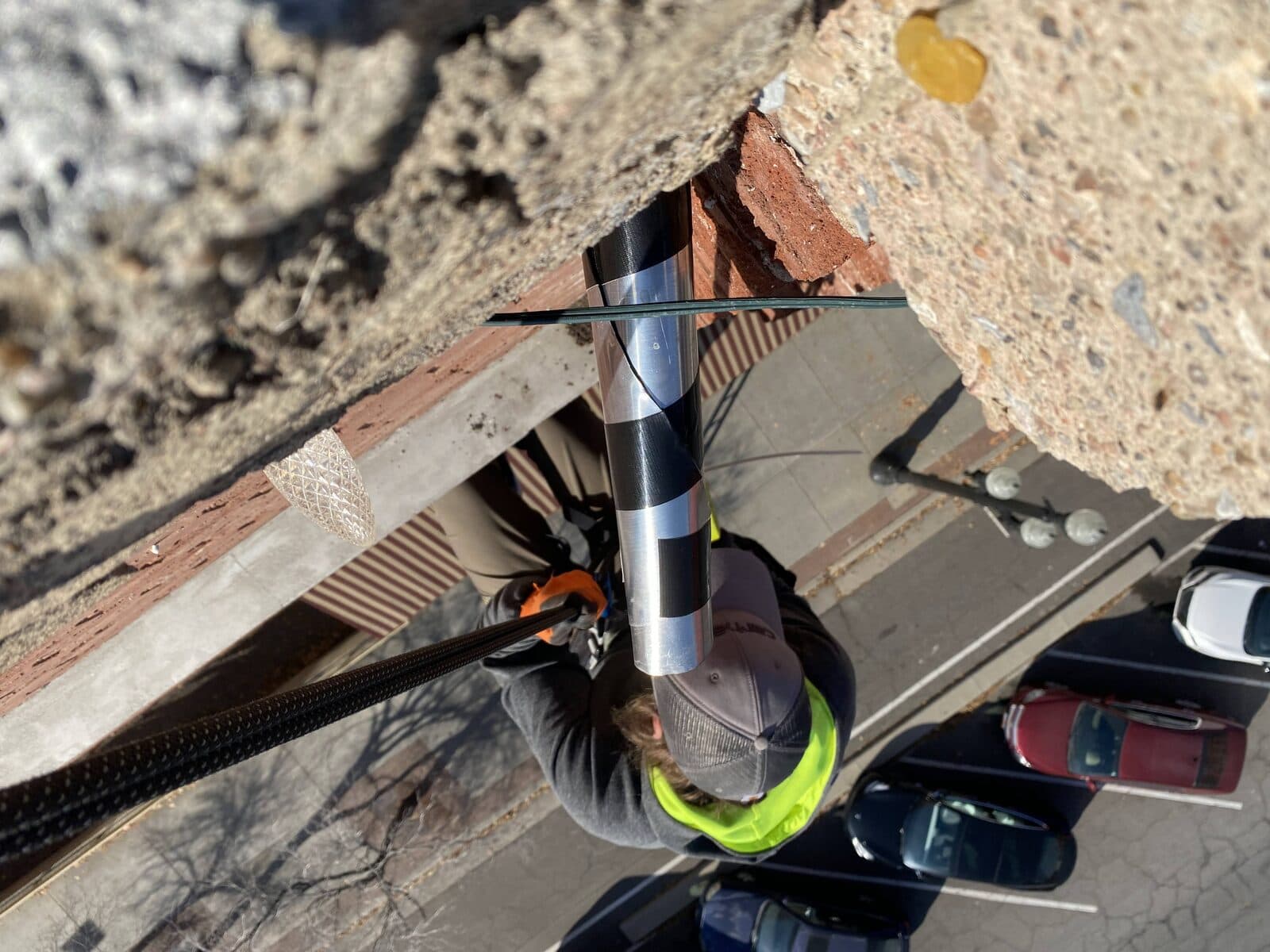
UC IPM calls eviction and exclusion "the only safe and permanent remedies" for a bat colony in a building. The method is to let bats leave at night but not return: UC IPM describes one-way netting or exit tubes over the active openings, left in place for 7 days before permanent repairs, and Bat Conservation International recommends exit tubes left up for at least 7 warm nights. Every other gap gets sealed first. BCI warns never to simply wait for bats to fly out at night and then seal the openings, because not all bats leave at the same time, and advises against expandable foam, which can trap and kill bats. The Fish and Game Commission's harassment rule (Title 14, section 251.1) bars disrupting wild mammals' normal behavior, including sheltering, but states that it does not apply to a landowner or tenant who drives or herds mammals to prevent damage to property.
Timing: work around the maternity season
Legal methods still have to be humane in their timing. UC IPM says to avoid excluding bat colonies when flightless young could be present, "usually May through September in California," because excluding the parents starves the young and creates odor and fly problems. Bat Conservation International puts pup-rearing at roughly April through September for North America and says to wait until fall or winter. UC IPM notes most bats leave buildings in late fall in most areas, making winter an ideal time for exclusion. During the pup season we inspect, map entry points and seal openings the bats are not using, then schedule the exclusion for after the pups can fly. Our fall and winter exclusion guide covers the calendar in more detail.
Rabies: when a bat touches a person or pet
The California Department of Public Health (CDPH) says bats and skunks are the animals that most often get rabies in California. In CDPH's provisional 2026 table (January 1 to October 14, 2026), bats account for 344 of the 368 rabid animals reported statewide. Those are lab results from bats submitted for testing, which are mostly sick bats or bats that had contact with people or pets; UC IPM notes that no more than 0.5% of randomly tested bats have been rabid. CDPH says bats have very small teeth and may not leave a mark, so talk with a healthcare provider if a bat was found in a room with a child, a person with an intellectual disability, or someone who was asleep or intoxicated, even without a visible bite. Wash any bite or scratch with soap and running water and get medical care right away; CDPH says rabies is 100% preventable with prompt care. Don't grab the bat yourself. If it can be done safely, contain it under a box or container and keep people and pets away so animal control can collect it for testing, as OC Animal Care advises.
Who to call
CDFW says that if a bat has come into direct contact with a person or pet, you should immediately notify your local health department and local animal services. A person with a possible exposure calls a doctor first. Then: in Orange County, the OC Health Care Agency's Communicable Disease Control Division (714-834-8180) for possible exposures, and OC Animal Care (714-935-6848) to report a bat in your home or an animal bite. In Los Angeles County, Veterinary Public Health (213-288-7060, weekdays 8 a.m. to 5 p.m.) offers rabies exposure consultations; Long Beach and Pasadena have their own city health departments. Elsewhere, call your county public health department and animal control. If no one had contact with the bat, CDFW suggests opening windows and exterior doors, closing doors to other rooms, turning off lights and fans and letting the bat leave on its own. Repeated bats indoors usually mean a roost in the attic or walls, and that is when a colony exclusion is needed.
Ready for help in Los Angeles, San Diego, or elsewhere in Southern California? Start with bat removal or an attic inspection.
Sources
- California Fish and Game Code §4150 (nongame mammals)
- California Fish and Game Code §86 (definition of take)
- California Fish and Game Code §4152 (nongame mammals injuring property)
- Cal. Code Regs. tit. 14, §472 (nongame birds and mammals)
- Cal. Code Regs. tit. 14, §251.1 (harassment of animals)
- CDFW: Human-Wildlife Conflicts, Bats
- UC IPM Pest Notes: Bats
- Bat Conservation International: Bats in Homes & Buildings
- CDPH: Rabies
- CDPH: Reported Animal Rabies by County & Species, 2026 (provisional)
- OC Animal Care: What to Do If You Find a Bat (flyer)
- OC Health Care Agency: Bat Found in Irvine Tests Positive for Rabies (Oct. 2, 2026)
- L.A. County Public Health, Veterinary Public Health: About Bats