
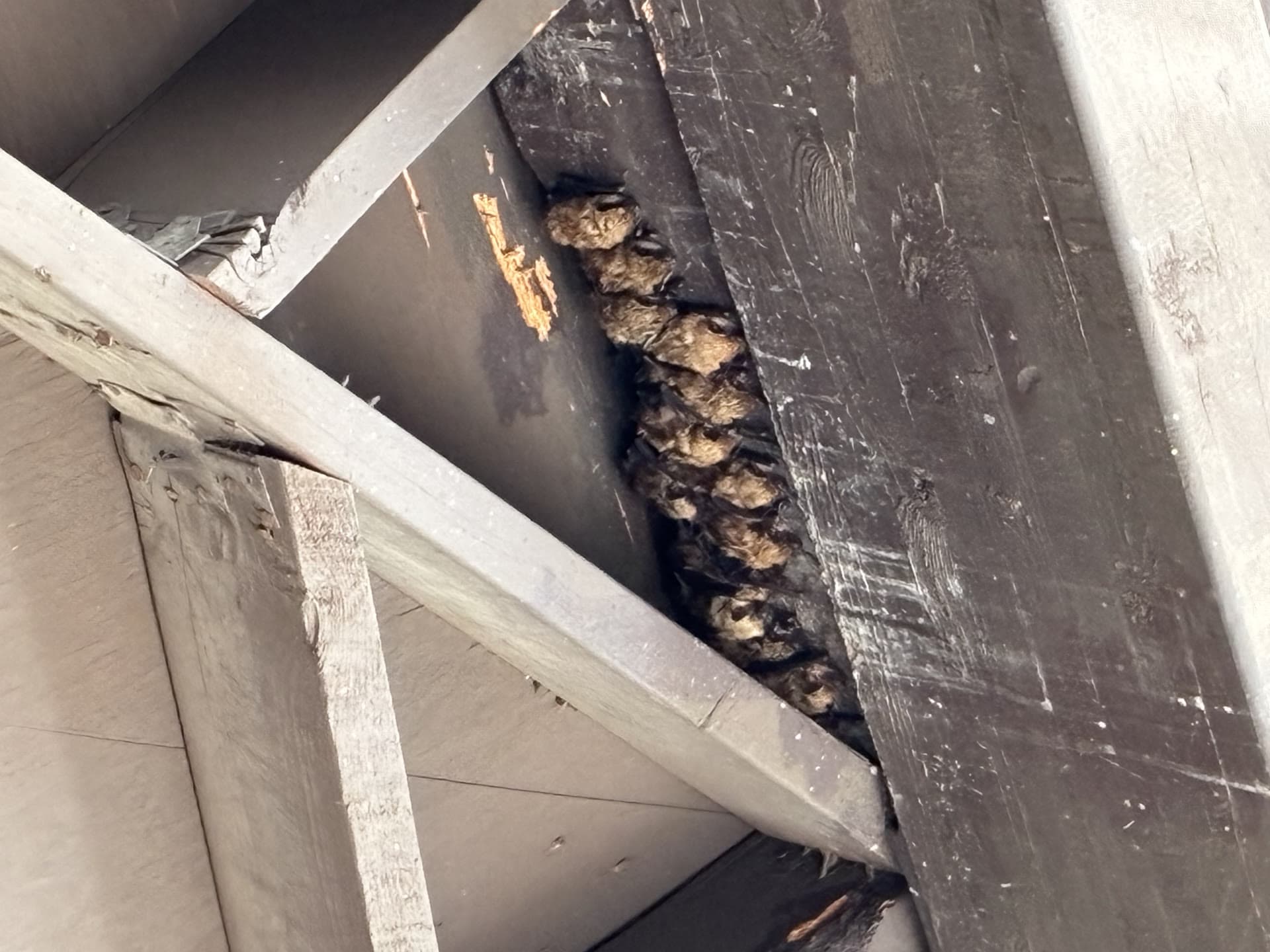
Torpor vs. hibernation
Bat Conservation International explains that bats use torpor, a temporary drop in body temperature and metabolism, throughout the year whenever conditions are poor for hunting. When a bat stays in torpor for weeks to months, that is hibernation. A hibernating bat's body temperature falls close to the temperature of its roost, usually 35–40°F, and BCI reports that hibernating big brown bats can slow to one breath every two hours. Hibernation is not one long sleep: bats arouse periodically to drink and clear waste, and every arousal burns stored fat. UC IPM adds the practical point for homeowners: in cool weather a bat can become torpid, and it can take an hour or more for a torpid bat to warm up enough to fly.
Which Southern California bats migrate, winter here or hibernate
UC IPM says California bats may migrate to warmer areas or to hibernation roosts in winter when insects are scarce. The Natural History Museum of Los Angeles County's Backyard Bats program, which has documented 16 species persisting in the Los Angeles area, gives a local picture: the Mexican free-tailed bat is the most common bat in the L.A. area, and populations from the southwestern U.S. migrate to overwinter in Southern California and Baja; hoary bats spend winters in Southern California; and western red bats and silver-haired bats move south or to more temperate areas for winter. CDFW's California Wildlife Habitat Relationships account for the Brazilian (Mexican) free-tailed bat says it apparently hibernates in coastal and Central Valley populations, making local movements to winter roosts, and uses mostly buildings along the coast.
The big brown bat: a building bat that hibernates close to home
CDFW's account for the big brown bat, one of the most common bats in Southern California buildings, describes a hibernating species that stores up to a third of its body weight in fat before winter. Its summer and winter ranges are the same, with local movements to suitable winter roosts; reported winter roosts include cracks in caves, mines and buildings. CDFW notes that it is cold-tolerant but wakes if temperatures drop below freezing and moves to a warmer spot, and that in Southern California its young are born in late May to early June. That is why a big brown bat colony can show up in an attic in summer and a few bats can still be found tucked into a wall or soffit gap in winter.
Sensitive species that should not be disturbed
Not every bat that hibernates in California is a house bat. CDFW's account for Townsend's big-eared bat, a California Species of Special Concern, says it occupies hibernation sites from about October to April, prefers cold but not freezing sites, and is extremely sensitive to disturbance. It is mainly a cave, mine and old-building species, not one we expect in a typical Orange County or Los Angeles tract-home attic. If an inspection turns up a sensitive species or an unusual roost, we stop and plan around it rather than force an exclusion.
Why a bat that looks sick or dead may be torpid
UC IPM says torpid bats can appear sick or dead, and may bare their teeth or hiss as a defensive display. It also says bats found on the ground or in the open during the day are not always sick; some are tired from long migration flights, which is relevant in fall when migrants are on the move. None of that makes a bat safe to touch. Rabid bats also turn up in fall and winter: CDPH's provisional 2026 table lists 344 rabid bats statewide from January 1 through October 14, including 31 in Orange County and 51 in Los Angeles County. Those are lab results from bats submitted for testing, mostly sick bats or bats that had contact with people or pets; UC IPM notes that no more than 0.5% of randomly tested bats have been rabid.
What to do with a still or grounded bat in fall or winter
Never handle a bat with bare hands. If the bat is outside, nobody has touched it and children and pets can't reach it, UC IPM suggests leaving it alone for an hour or two so it can warm up and leave. If it could be reached, cover it with a box or bucket and call animal control. If a bat is inside your home and you didn't see it come in, or it was found in a room with a sleeping person or a child, don't release it: OC Animal Care's bat flyer says to close off the room, contain the bat under a box or bucket if it's safe, keep people and pets away and call animal control so it can be tested. If anyone was bitten, scratched or may have had contact, wash the area with soap and water and call a doctor right away; CDPH says bats have very small teeth and may not leave a mark.
What this means for a bat problem in your house
A quieter roofline in November doesn't prove a building is bat-free. UC IPM notes that most bats leave buildings in late fall in most areas, which is why winter is a good time for exclusion, but in mild coastal areas some bats may stay, and a colony sometimes shows up in spring or fall as a migratory group that moves on after a few weeks. Bats tucked deep in a wall in torpor won't fly out on a cool evening, so sealing a building just because no fly-out was seen can trap them. That is why exclusion still uses one-way devices; UC IPM describes leaving them in place for 7 days. Bat Conservation International advises against expanding foam, and UC IPM says no pesticides or repellents are registered in California for bats and that ultrasonic devices have proven ineffective.
Ready for help in Los Angeles, San Diego, or elsewhere in Southern California? Start with bat removal or an attic inspection.
Sources
- Bat Conservation International: Torpor: How Bats Chill (Feb. 25, 2025)
- UC IPM Pest Notes: Bats
- Natural History Museum of LA County: Backyard Bats
- CDFW CWHR: Brazilian (Mexican) free-tailed bat life history account
- CDFW CWHR: Big brown bat life history account
- CDFW CWHR: Townsend's big-eared bat life history account
- CDPH: Rabies
- CDPH: Reported Animal Rabies by County & Species, 2026 (provisional)
- OC Animal Care: What to Do If You Find a Bat (flyer)
- Bat Conservation International: Bats in Homes & Buildings