
Step 1: Keep everyone away and close off the room
Don't touch the bat, and don't swat at it. Get children and pets out of the room, close the interior doors and put a towel along the gap under the door if you can. Note who was in the room and whether anyone was asleep. The CDC says bat bites can be tiny and you may not even know you were bitten, so a bat found in a room with a sleeping person, a young child or a pet is treated differently from one you watched fly in through an open door.
Step 2: Don't let it go until you've talked to public health
The CDC says that if you find a bat in your home, you should contact animal control or your health department to safely capture it for rabies testing, and not release it until you have talked with a public health expert. Los Angeles County's Veterinary Public Health program said the same in an October 9, 2026 advisory: a bat found indoors should not be released or discarded; it should be contained and animal control called to collect it, and testing is free. The reason is practical. If the bat escapes and can't be tested, anyone who may have had contact is generally assumed to have been exposed, and LA County notes that rabies post-exposure treatment is a series of shots given over two weeks. A negative test can spare someone that.
Step 3: Contain it safely, or wait for animal control
If you can't do this safely, don't; keep the room closed and wait for help. The CDC's safe-capture steps: find a box or container big enough for the bat and a piece of cardboard large enough to cover the opening, punch small air holes in the cardboard and put on leather work gloves. When the bat lands, approach slowly, put the container over it, slide the cardboard underneath and tape it shut. Then call to have the bat tested and to find out whether anyone needs medical care. OC Animal Care's bat flyer gives the same basic advice for Orange County: never touch a bat, cover it with a box or bucket if it is safe to do so, keep people and pets away and call animal control.
Step 4: Who to call in Orange County, Los Angeles County and Long Beach
Animal control varies by city, so check your own city's page. In Orange County, OC Animal Care serves the unincorporated areas and many contract cities at 714-935-6848 (8 a.m.–5 p.m.) or 714-259-1122 after hours, and its Rabies Control Desk handles bites and exposures at 714-796-6421 on weekdays. Several OC cities run their own animal control, including Garden Grove (714-741-5565), Westminster (714-548-3201), Irvine, Santa Ana and, since July 2023, Seal Beach through its police department (562-594-7232). The OC Health Care Agency's Communicable Disease Control line, 714-834-8180, is staffed 24/7 to assess possible rabies exposures. In Los Angeles County, call your city's animal control or the county's Veterinary Public Health program, which tracks bat rabies countywide; Long Beach has its own health department, and Long Beach Animal Care Services collects bats for testing at 562-570-7387. Our city pages list the local numbers for each city we serve.
Step 5: If anyone was bitten, scratched or may have had contact
The CDC says to wash any bite or scratch with soap and water and get medical help right away, and to see a healthcare professional urgently if bat saliva may have gotten into the eyes, nose, mouth or an open wound. If you think you may have had contact, talk to your health department; it decides whether treatment is needed, often based on whether the bat can be tested. Pets that may have had contact should see a veterinarian.
Why this matters right now
Bats are the most commonly reported rabid animal in the United States, and the CDC says most people in the U.S. who die of rabies were exposed to a rabid bat. California's provisional 2026 table from the Department of Public Health lists 344 rabid bats statewide from January 1 through October 14, including 51 in Los Angeles County and 31 in Orange County. LA County Public Health reported 74 rabid bats detected in the county as of October 8, 2026, breaking last year's record of 69, with hot spots in the Santa Clarita and San Fernando valleys, and found the county's first rabid raccoon since 1973, infected with a bat rabies variant. Keep the numbers in perspective: LA County estimates about 1% of bats in nature have rabies, while 14–19% of the bats it tests are positive, because the bats submitted are mostly sick, grounded or found indoors. It also reports that the share of tested bats that are positive has a small peak in late spring and a larger one, above 30%, in late summer. That is exactly why a bat found inside your home should be tested rather than released.
Signs a bat may be sick
The CDC lists unusual behavior that could indicate rabies: a bat that is active during the day, found in an unusual place such as inside a home or on the ground, unable to fly or easy to approach, or one that has made contact with a person. A healthy bat avoids people. None of these signs can be used to rule rabies in or out; only a lab test can, which is another reason to let animal control collect the bat.
One bat or a colony? What repeat visitors mean
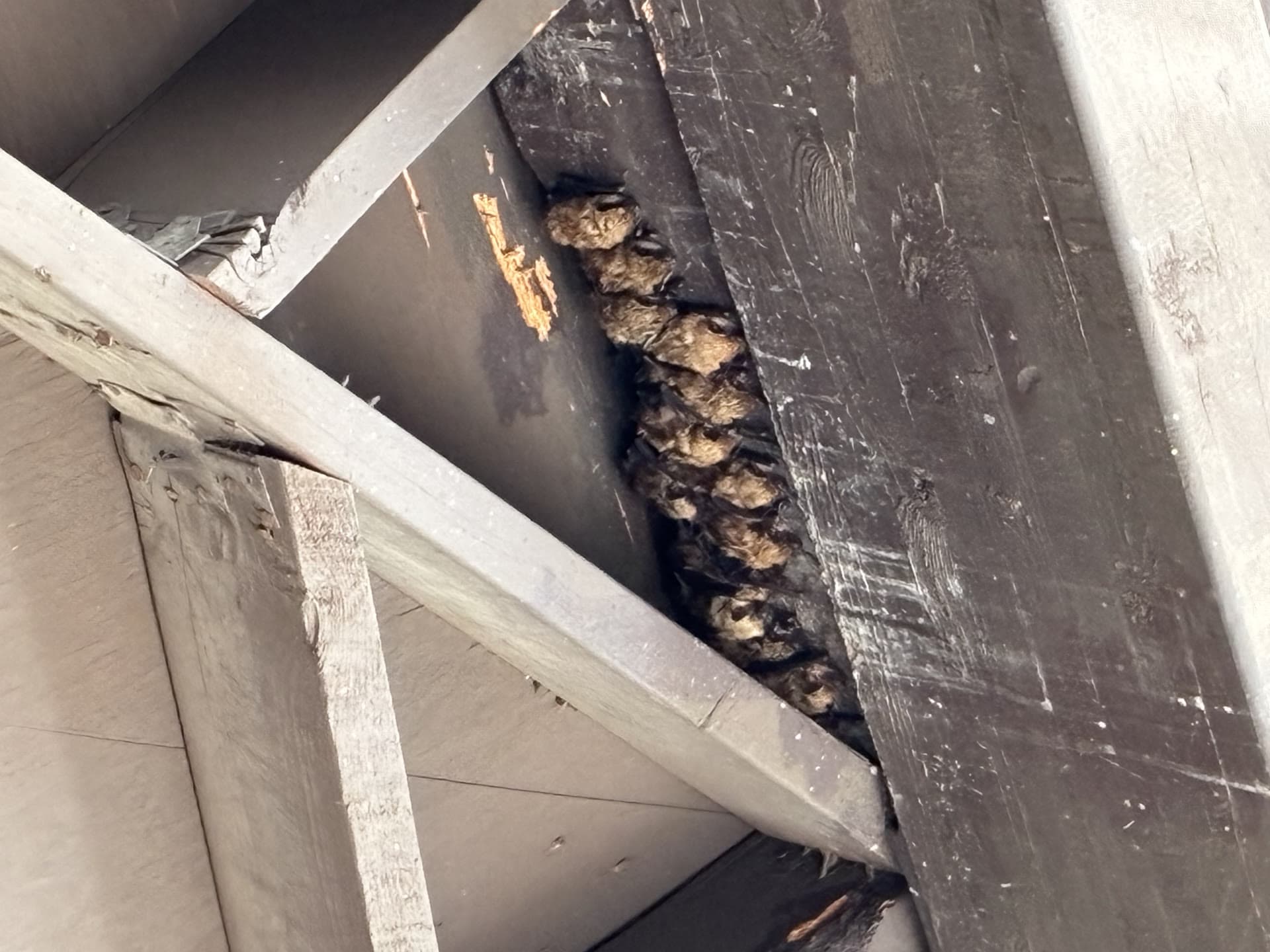
A single bat that flew in through an open door on a warm night is usually a one-off. Bats that keep turning up indoors, especially in the same rooms, near a fireplace, attic hatch, recessed lights or a garage, usually mean a roost in the attic, walls or chimney with a gap leading inside. Other clues are dark droppings collecting below a roof edge or vent, an ammonia smell, scratching at dusk and bats leaving the roofline after sunset. The CDC says bats can fit through openings as small as 1/4 inch and that most bats leave buildings in fall or winter, the best time to bat-proof. UC IPM advises against excluding colonies while flightless young may be present, usually May through September in California, and says no pesticides or chemical repellents are registered in California for bats. The fix is one-way exclusion followed by permanent sealing, not trapping or killing; OC Animal Care's flyer notes that bats are protected wildlife and it is illegal for the public to kill, harm or keep one.
Ready for help in Los Angeles, San Diego, or elsewhere in Southern California? Start with bat removal or an attic inspection.
Sources
- CDC: Preventing Rabies from Bats (July 1, 2025)
- LA County Public Health: Animal Health Advisory, rabid raccoon and record number of rabid bats (Oct. 9, 2026)
- LA County Veterinary Public Health: Bats in Los Angeles County
- CDPH: Reported Animal Rabies by County & Species, 2026 (provisional)
- CDPH: Rabies
- OC Animal Care: What to Do If You Find a Bat (flyer)
- OC Health Care Agency: Bat found in City of Orange tests positive for rabies (Oct. 2025)
- City of Seal Beach: Animal Control
- City of Garden Grove: Animal Care Services
- UC IPM Pest Notes: Bats