
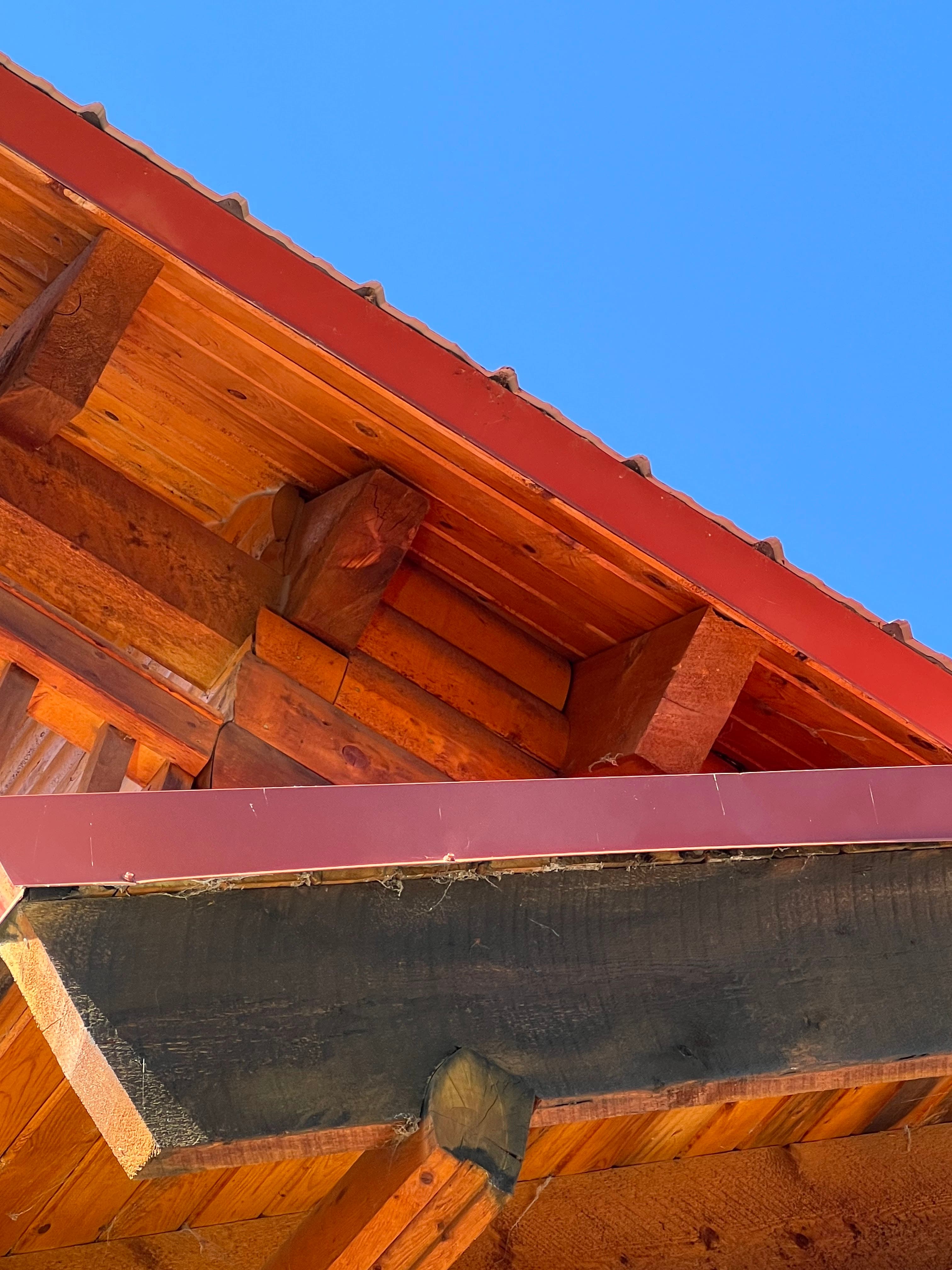
Why the eave edge of a tile roof is a bat doorway
S-tile, barrel (pan-and-cover) and other high-profile tiles are curved, so the first row at the eave leaves an open arch between the tile and the roof deck. The Tile Roofing Industry Alliance's installation manual describes the eave closure as the piece that closes "the convex opening created by the shape of the tile at the eave," and the bird stop as a product used at the eave "to stop birds from entering below the tile." When those pieces are missing, cracked, pushed out or were mortar that has since crumbled, the space under the tiles is open to anything small enough to fit. UC IPM says bats can squeeze through openings as small as 1/4 inch. From there a colony can roost in the warm air space under the tiles, or follow a gap in the underlayment, fascia or sheathing into the attic.
Not every tile roof was built with a bird stop
The Tile Roofing Industry Alliance's 2024 manual says a bird stop is required on high-profile tile but optional on low- and medium-profile tile unless the local building official requires it, and that a bird stop may be solid or vented. The same manual says metal, honeycomb plastic, foam fillers, mortar or equivalent should be considered to seal larger openings into the roof system to help keep birds and vermin out. In practice that means two homes with the same-looking roof can be very different underneath. Older roofs often relied on mortar at the eave, which cracks and falls out over the years, and ridge and hip ends, rake edges and the spots where tile meets a stucco wall or parapet can leave gaps of their own.
Which bats use tile roofs
The Mexican free-tailed bat is the bat we most often associate with tile. The Natural History Museum of Los Angeles County calls it the most common bat in the L.A. area and a particularly gregarious species that roosts in colonies, and CDFW's habitat account says it apparently uses mostly buildings along the coast. Narrow, hot gaps like the space under curved tile suit it well. Big brown bats, which CDFW says use buildings so heavily that their natural roosting habits are poorly known, are more often found once they get into the attic itself. Sea and Sage Audubon names the free-tailed bat, big brown bat and Yuma myotis as Orange County's three most common bats. Which species is in a particular roof is confirmed at inspection, but the fix is the same: humane one-way exclusion, then permanent closures.
Signs the bats are under your tiles
UC IPM recommends watching the building at dusk to see where bats come out, then inspecting by day for the holes or cracks they use, along with the staining, urine and droppings that collect below entry points. On a tile roof, look for dark, crumbly droppings on the ground, patio, window sills or wall just below the eave line, especially below one or two spots rather than spread along the whole roof; brown staining on stucco under a tile end; and squeaking from the roof edge on warm afternoons. Bat droppings crumble into shiny insect fragments when crushed, which UC IPM says helps tell them from mouse droppings. Don't climb onto a tile roof to look: tiles break under foot, and the bats should not be handled. Our signs-of-bats checklist walks through the ground-level clues.
How bat exclusion works on a tile roof
UC IPM says bats can be excluded from Spanish tile roofs using bird netting, that the open ends of the tiles can then be filled with concrete or tightly fitted bird-stop strips, and that netting or exit tubes should stay in place for 7 days to make sure no bats are trapped inside before permanent repairs are made. It also notes that rain gutters are often the simplest solution where they cover the tile ends. Our version of that: we map every open tile end, ridge and hip end, rake edge and roof-to-wall joint, fit one-way devices on the openings the bats are actually using, and close the rest with bird stops or closures that match the tile profile and color. After the bats are out, the one-way devices come off and those openings are closed too. Nothing is sealed while bats are inside, and UC IPM says no pesticides or chemical repellents are registered in California for bats, so no sprays are involved.
Re-roofing or tile repair? Plan around the pup season
UC IPM advises against excluding a colony while flightless young may be present, usually May through September in California, because the adults get shut out and the pups starve inside. The same logic applies to roof work: lifting tiles, replacing underlayment or closing eaves over an active maternity colony can trap or kill bats, which California does not allow. If you see bat signs and are planning a re-roof, a tile repair or new gutters, get the roof inspected first and schedule the tile work for after the bats are out. Done in the right order, a re-roof is a good chance to install a continuous bird stop and closures at every eave, ridge and rake.
Why late fall and winter are the time to fix it
UC IPM notes that most bats leave buildings in late fall in most areas, which makes winter an ideal time for exclusion. In mild Southern California winters not every colony leaves, so we inspect first and still use one-way devices if bats are present. Bat Conservation International warns never to seal openings after watching bats fly out at night, because not all of them leave at once. Getting the tile ends closed between late October and early spring means the roof is shut before females return to form maternity colonies.
Ready for help in Los Angeles, San Diego, or elsewhere in Southern California? Start with bat removal or an attic inspection.
Sources
- UC IPM Pest Notes: Bats
- Tile Roofing Industry Alliance: Concrete and Clay Roof Tile Installation Manual (March 2024)
- Natural History Museum of Los Angeles County: Backyard Bats
- CDFW CWHR: Brazilian (Mexican) free-tailed bat life history account
- CDFW CWHR: Big brown bat life history account
- Sea and Sage Audubon: Discover Bats in Orange County
- Bat Conservation International: Bats in Homes & Buildings
- CDFW: Human-Wildlife Conflicts, Bats