
Orange County · California
Bat removal in Seal Beach, California
Seal Beach—about 24,400 people on 11.4 square miles at Orange County's northwest corner, between Long Beach and Huntington Beach—is a small city with an unusual mix of homes: Old Town beach houses, postwar tracts, a 1960s retirement community and a naval weapons station that covers most of its land. Bats live here too; a rabid bat was found in front of a Seal Beach Boulevard store in 2019, and Mexican free-tailed bats have been observed at the Seal Beach National Wildlife Refuge. California Bat Removal Pros provides humane bat inspection, one-way exclusion, sealing with custom inserts (not spray foam) and optional attic guano cleanup across Seal Beach, with a two-year written warranty on whole-structure work.
Are there bats in Seal Beach?
Yes. Sea and Sage Audubon says sixteen bat species occur in Orange County and names the Mexican free-tailed bat, Yuma myotis and big brown bat as the three most common, all of which roost in buildings as well as natural sites. In Seal Beach itself, the Sun News has reported Mexican free-tailed bats observed at the Seal Beach National Wildlife Refuge, where bat boxes have been put up in the refuge garden, and the Los Angeles Times reported that a live bat found in front of a store at 12345 Seal Beach Blvd. on the evening of Oct. 6, 2019 tested positive for rabies—the fifth rabid bat found in Orange County that month. The California Department of Public Health's provisional 2026 table lists 31 rabid bats in Orange County from January 1 through October 14. Most residents only notice bats when droppings, an ammonia smell or a dusk fly-out shows up at their own roofline.
We have not found a published list of the bat species using buildings in Seal Beach; the species below are the ones Orange County and statewide sources describe as building users. The 2019 case is one documented rabid bat, not a measure of how common rabies is locally, and the CDPH numbers are county-wide lab results, mostly from sick or grounded bats submitted for testing; UC IPM notes that no more than 0.5% of randomly tested bats have been rabid. Which bat is in a particular roof is confirmed at inspection.
Who to call about a bat in Seal Beach
Since July 1, 2023, Seal Beach has run animal control in-house through the Seal Beach Police Department; before that, Long Beach Animal Care Services handled it under contract from 2004 to 2023, so older guidance pointing Seal Beach residents to Long Beach is out of date. To report a stray, injured or dead animal or an animal bite, the City says to call SBPD dispatch at 562-594-7232, or 911 for an emergency; general questions go to 562-799-4100 ext. 1606 or animalcontrol@sealbeachca.gov. The City notes that animal bites must be reported within 24 hours. Never touch a bat. If you find one inside and did not see it come in, or it was in a room with a sleeping person, a child or a pet, don't release it: close off the room, cover the bat with a box or bucket if it's safe, keep people and pets away and call dispatch so it can be collected and tested. The CDC says not to release a bat found in your home until you have talked with a public health expert. If anyone was bitten, scratched or may have had contact, wash the area with soap and water and get medical care promptly; the OC Health Care Agency's Communicable Disease Control Division (714-834-8180, answered 24/7) assesses possible rabies exposures. Colonies roosting in roofs or walls are not animal-control pickups; they are handled by one-way exclusion.
Bat species most relevant to Seal Beach homes
- Mexican free-tailed bat (Tadarida brasiliensis): Reported at the Seal Beach National Wildlife Refuge (Sun News), one of Orange County's three most common bats according to Sea and Sage Audubon, and on UC IPM's list of bats most likely to use structures in California cities. CDFW's habitat account says that along the coast it apparently roosts mostly in buildings, favoring tight, hot gaps such as tile ends and gaps behind fascia.
- Yuma myotis (Myotis yumanensis): Another of Orange County's most common bats. Sea and Sage Audubon says it forages mainly over calm water in the first two hours after sunset and roosts in buildings and bridges, which makes homes near the refuge's tidal channels and the San Gabriel River relevant.
- Big brown bat (Eptesicus fuscus): The third of Orange County's most common bats. UC IPM lists it among urban building bats, and CDFW's habitat account says it uses buildings so heavily that its natural roosting habits are poorly known. It is the classic attic, soffit and wall-void bat of older homes.
- Other Myotis and the pallid bat (Myotis spp., Antrozous pallidus): UC IPM includes other Myotis species and the pallid bat, California's state bat (CDFW), among the bats that frequently use attics and barns in California. We have not found a Seal Beach record for these in buildings, so they are listed for completeness; species are confirmed on site.
More detail: California bat species guide.
Where bats get into Seal Beach homes
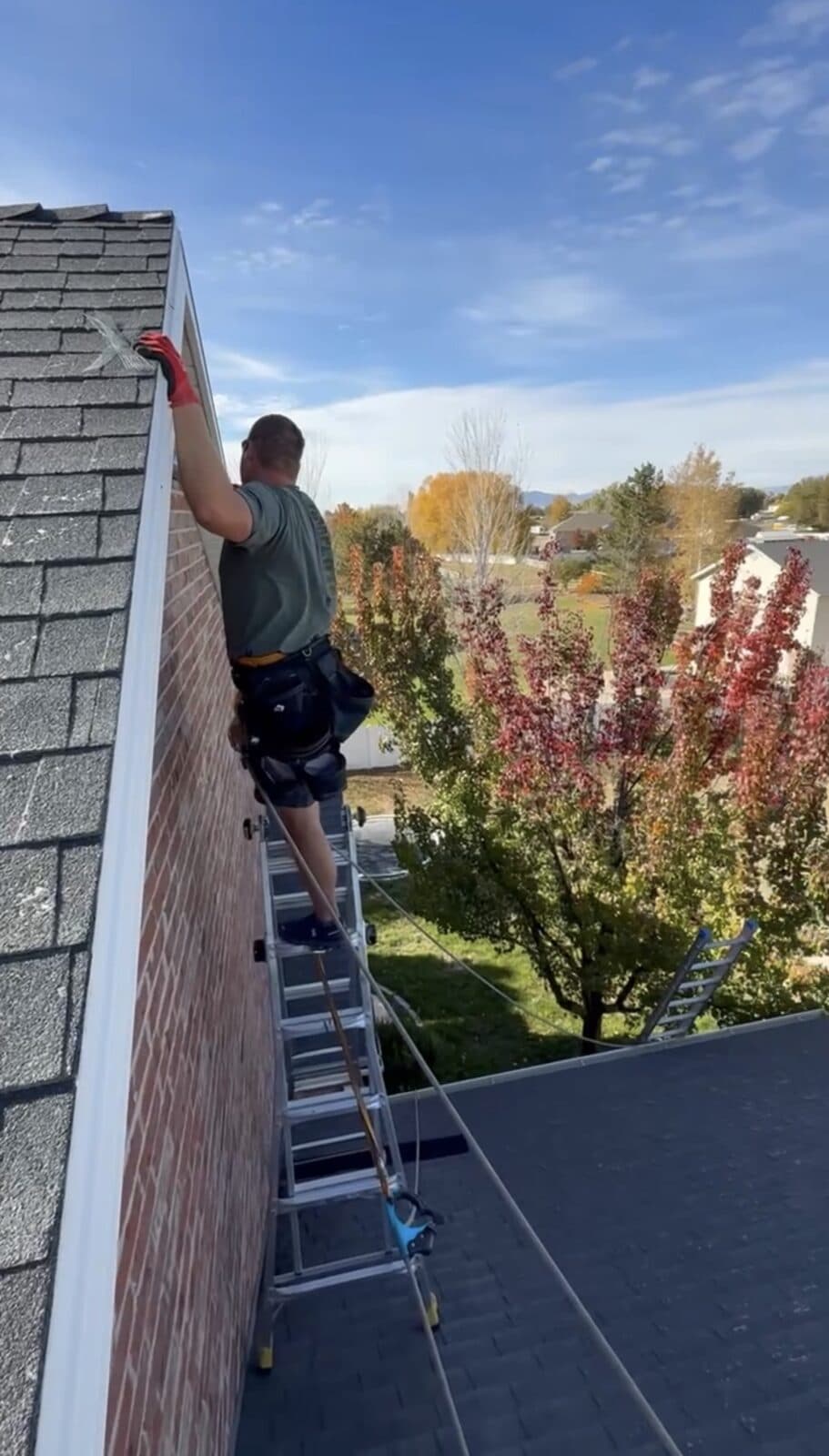
The City's Housing Element says about three-quarters of Seal Beach homes were built before 1970, from Old Town and the 1950s Marina Hill subdivision to Leisure World (opened 1962) and College Park East (1966). UC IPM lists the usual colony entry points as beneath eaves, around chimneys, around air and plumbing vents, near loose boards, beneath roof caps and through holes other animals have made, says bats can squeeze through openings as small as 1/4 inch, and notes that open tile ends can be closed with tightly fitted bird-stop strips. On Seal Beach buildings we check first:
- Shrunken or rotted fascia and trim boards, loose siding and chimney flashing on older Old Town cottages and duplexes weathered by salt air
- Fascia-to-stucco gaps, open tile ends and torn gable-vent screens on 1950s–60s Marina Hill and College Park tract homes
- Long, low eave runs and shared attics on Leisure World garden-style buildings, where every opening on the building has to be mapped together
- Parapets, roof-deck penetrations and tile details on newer narrow-lot rebuilds near Main Street
- Parapets, coping and mechanical curbs on commercial roofs along Seal Beach Boulevard and Pacific Coast Highway
When bats are most active around Seal Beach
- Spring and summer (maternity)
- UC IPM says female bats form colonies in spring to give birth and raise their young, and that flightless young may be present usually from May through September in California. Bat Conservation International puts pup-rearing at roughly April through September for North America. This is when roosts in buildings are busiest, and when colony exclusion should wait.
- Calm evenings near the refuge and river
- The Housing Element describes the Seal Beach National Wildlife Refuge as about 900 acres of subtidal, intertidal, mudflat, salt marsh and upland habitat, and the San Gabriel River reaches the ocean on the Long Beach line. Yuma myotis feed mainly over calm water shortly after sunset, and Mexican free-tailed bats emerge shortly after dusk and feed high overhead.
- Fall and winter (the usual exclusion window)
- UC IPM notes that most bats leave buildings in late fall in most areas, which makes winter a good time for exclusion. Coastal Seal Beach winters are mild, so we inspect first. UC IPM says no pesticides or chemical repellents are registered in California for bats, so we use one-way devices followed by permanent sealing; no bat is sealed inside.
Planning an exclusion? See our fall and winter bat exclusion guide, the maternity season guide or the bat eviction season checker. For what California law allows, read are bats protected in California?
Nearby city pages: Long Beach bat removal, Huntington Beach bat removal, Westminster bat removal, Garden Grove bat removal, Fountain Valley bat removal. This Seal Beach page covers the whole city—Old Town, Marina Hill, College Park East and West, Leisure World and Surfside—plus neighboring Rossmoor. Leisure World mutuals, College Park HOAs and Coastal Zone rules can all affect exterior work, so we document the scope with photos and match closures to the existing trim, tile and stucco.
Sources
- Sea and Sage Audubon: Discover Bats in Orange County
- City of Seal Beach: Animal Control
- City of Long Beach: Seal Beach departs Long Beach animal care contract (June 30, 2023)
- City of Seal Beach: 2021–2029 Housing Element (adopted Feb. 7, 2022)
- Sun News: Bugs, bats, and botanicals at National Wildlife Refuge
- Los Angeles Times: Live rabid bat found in Seal Beach (Oct. 10, 2019)
- OC Health Care Agency: Bat Found in City of Orange Tests Positive for Rabies (Oct. 2025)
- CDPH: Reported Animal Rabies by County & Species, 2026 (provisional)
- OC Animal Care: What to Do If You Find a Bat (rabies flyer)
- CDC: Preventing Rabies from Bats
- CDFW CWHR: Brazilian (Mexican) free-tailed bat life history account
- CDFW CWHR: Big brown bat life history account
- UC IPM Pest Notes: Bats
- CDFW: Human-Wildlife Conflicts, Bats
- Bat Conservation International: Bats in Homes & Buildings
Seal Beach roof types & where bats get in
Older Old Town cottages, duplexes and narrow-lot rebuilds, 1950s–60s stucco tract homes in Marina Hill and College Park, single-story garden-style buildings in Leisure World, and beachfront Surfside homes; about three-quarters of homes predate 1970.
Entry points we check first on Seal Beach homes:
- gaps where fascia board meets stucco or the roof deck
- gaps behind wood siding, trim and porch roof tie-ins
- gable and attic vents with torn or missing screens
- clay or concrete tile ridge and eave closures (bird stops missing or broken)
- chimney chases and flashing
- parapet caps, coping and expansion joints on flat or low-slope roofs
Bats can fit through gaps of about 3/8 inch (California Dept. of Food & Agriculture vertebrate pest handbook). Not sure? Use our signs-you-have-bats checklist.
Seal Beach climate & bat season
Seal Beach is right on the coast, with mild winters, cool marine-layer mornings and salt air that wears down fascia, vent screens and sealants faster than inland.
Maternity season rules for Seal Beach bat exclusion
California treats bats as protected nongame mammals, so they may not be killed, poisoned or trapped. Exclusion is the humane, legal route. UC IPM advises against excluding colonies when flightless young could be present, usually May through September in California, because the parents get shut out and the pups starve inside the walls. We inspect and plan during that window, then exclude once the pups can fly. Fall, winter and early spring are the usual exclusion months. The CDFW bats page covers safety and conflict guidance, and you can report a colony to CDFW. Timing source: UC IPM bats. Guano health: CDC on histoplasmosis.
Planning for this fall or winter? Read our fall and winter bat exclusion guide for California timing, and are bats protected in California? for what the law allows.
Is it safe to evict bats now? Check the seasonLocal housing & attic patterns in Seal Beach
The City's 2021–2029 Housing Element says Seal Beach incorporated in 1915, that the Navy acquired about half the city in 1944 for what is now Naval Weapons Station Seal Beach (about 70% of the city's area today), that the Marina Hill subdivision pushed the population past 7,000 by 1954, that Leisure World opened in 1962 as the first major planned retirement community in the United States, and that College Park East was developed in 1966, adding about 5,000 residents. About three-quarters of the city's homes were built before 1970. Larger multifamily buildings are the most common housing type (7,012 units, most of them in Leisure World), and single-family homes are about 43%. Leisure World is mostly single-story “garden style” buildings of one- and two-bedroom units, maintained by resident mutuals with the Golden Rain Foundation managing shared amenities. That adds up to four very different roofs: older Old Town cottages, duplexes and newer narrow-lot rebuilds near Main Street and the pier; 1950s–60s stucco tract homes in Marina Hill and College Park East; long, low garden-unit buildings in Leisure World; and beachfront Surfside Colony homes plus the city's one mobile home park, Seal Beach Shores. UC IPM says the bats that most often use structures in California urban areas are Mexican free-tailed bats, big brown bats, Yuma myotis and other Myotis, and pallid bats, and that bats can squeeze through openings as small as about 1/4 inch. We confirm the species and map every entry point before any exclusion device goes on.
Bat seasonality around Seal Beach
UC IPM advises against excluding a colony while flightless young may be present, usually May through September in California, and notes that most bats leave buildings in late fall. Late fall and winter are therefore the usual Seal Beach exclusion window. The California Department of Public Health's provisional 2026 table lists 31 rabid bats in Orange County from January 1 through October 14—county-wide lab results, mostly from sick or grounded bats, not a count of bats living in Seal Beach. Coastal winters are mild, so a bat can still turn up in a heated building; call any month if you hear scratching, smell ammonia or find guano.
Neighborhoods & landmarks we know
We cover all of Seal Beach: Old Town between Pacific Coast Highway and the beach, Marina Hill, College Park East and College Park West, Leisure World, Surfside Colony and the commercial roofs along Seal Beach Boulevard and Pacific Coast Highway, plus the neighboring unincorporated community of Rossmoor. The Housing Element says more than 60% of the city lies in the Coastal Zone, and the Seal Beach National Wildlife Refuge—about 900 acres of tidal channels, mudflats, salt marsh and upland inside the weapons station—plus the San Gabriel River mouth on the Long Beach line give bats insect-rich foraging close to homes, without implying a roost on any specific property. Nearby city pages cover Long Beach, Huntington Beach, Westminster, Garden Grove and Fountain Valley.
Why hire a local Southern California crew
Seal Beach jobs range from salt-weathered Old Town homes to HOA- and mutual-managed buildings in Leisure World and College Park, so the work is as much about coordination as sealing. Salt air ages vent screens, sealants and fascia faster on the coast, and we seal with custom inserts and clear or color-matched products instead of spray foam. We provide photo documentation for owners, mutual boards and property managers and route Seal Beach jobs with nearby Long Beach, Huntington Beach and Westminster work when schedules allow.
- Bat specialists since 2011 — bats are our flagship service
- Documented inspection: openings numbered, photographed, primary vs. secondary
- Targeted repair or whole-structure seal (warranty on whole-structure)
- Humane one-way exclusion · maternity timing per UC IPM (usually May–September)
- High-rise / rope-access capacity for elevated buildings
- We finish failed prior jobs—remove old foam and devices
- Two-year written warranty on sealed whole-structure work
- Local owners, California coverage, backed by a multi-state team
Typical Seal Beach jobs start with a phone consultation, then an attic inspection, followed by humane exclusion and optional guano cleanup. Commercial properties can use our commercial bat removal program.
Seal Beach bat removal FAQ
Seal Beach & nearby cities
- Long Beach bat removal
South Bay / Harbor
- Huntington Beach bat removal
Orange County coast
- Westminster bat removal
Orange County
- Garden Grove bat removal
Orange County
- Fountain Valley bat removal
Orange County
- Costa Mesa bat removal
Orange County
- All service areas
Southern California hub
- Bat removal service
Residential & commercial
- Fall & winter bat exclusion
California exclusion timing
- Are bats protected in California?
Bat laws & legal removal
- Bat eviction season checker
Is it safe to exclude now?
- Signs you have bats
Interactive checklist
- How we work
Process steps
- Warranty
Two-year coverage
- FAQ
Common questions
Bat problems in Seal Beach? Let's talk.
Humane exclusion for Seal Beach and the surrounding Orange County. Two-year written warranty on whole-structure work. Same-day often available across Southern California.