
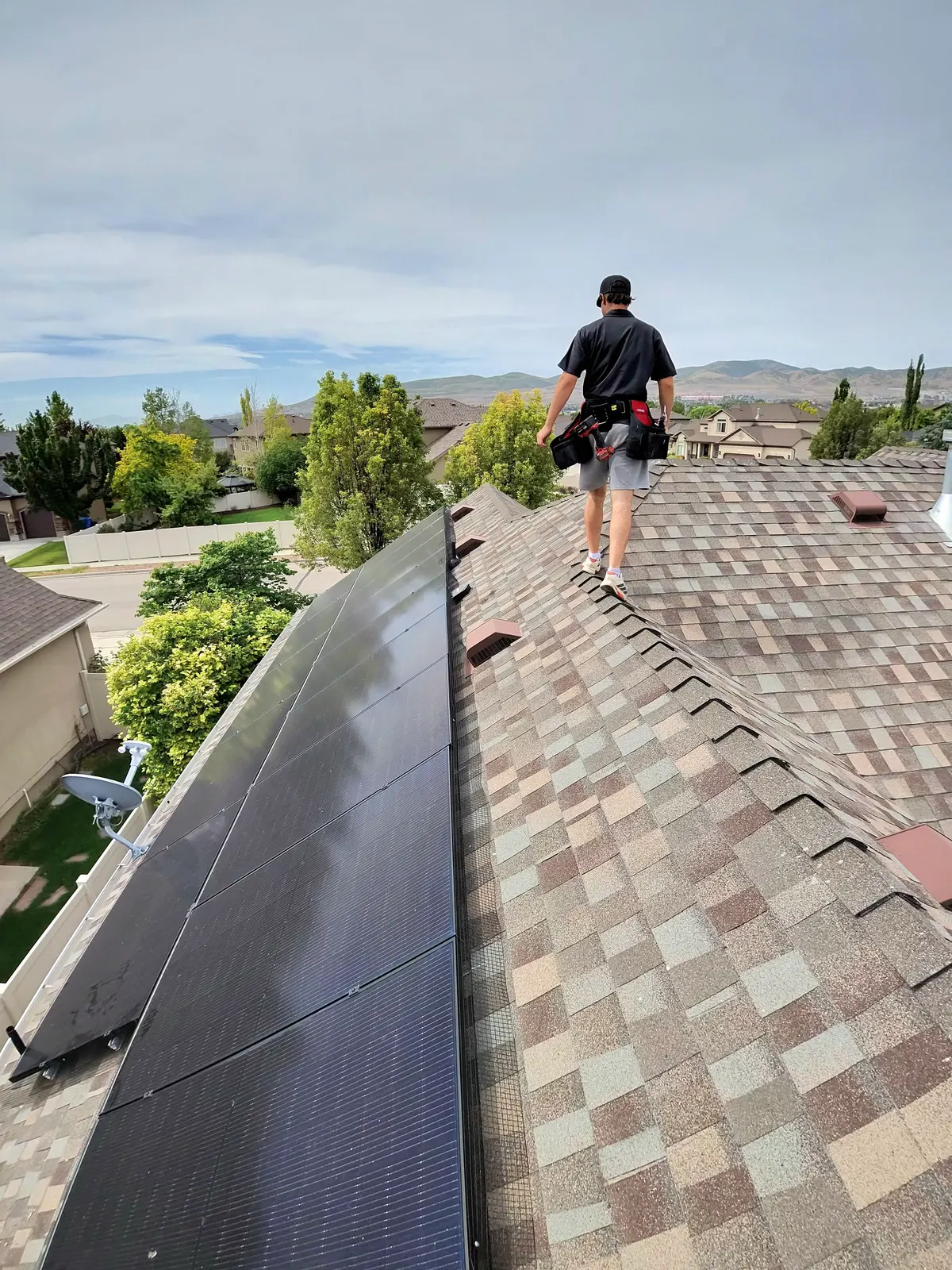
Why tile roofs plus solar create bat habitat
S-tile, barrel and other high-profile tiles leave an open arch between the first row of tile and the roof deck. The Tile Roofing Industry Alliance's installation manual describes the eave closure as the piece that closes that convex opening, and the bird stop as the product used at the eave to keep birds (and by the same geometry, bats) from entering below the tile. When those pieces are missing, cracked or were mortar that has crumbled, the space under the tiles is open. An on-roof solar array sits on brackets above the existing tiles. That creates a second warm, shaded air space between the panels and the tile surface. In summer Inland Empire and coastal SoCal heat, those voids can feel like a natural crevice roost to Mexican free-tailed bats and other building bats. Droppings on the driveway, patio or lower roof below a panel edge or open tile end are often the first sign.
On-roof vs in-roof panels
The Bat Conservation Trust distinguishes two main systems. On-roof panels are fixed to brackets above the existing tiles or shingles; in-roof systems remove tiles and replace them with panels that sit flush with the roof plane. BCT says an on-roof system is generally likely to have less impact on bats than an in-roof system, but it can still change temperature or roosting conditions for bats under the tiles and can block access points. Wiring or equipment run through the attic can also disturb a colony. In California practice, most residential retrofit arrays are on-roof over existing tile or composition. In-roof and tile-replacement installs are more common on new construction or full re-roofs—and those are also the jobs where missing bird stops get locked in for another twenty years if nobody closes the eaves.
Inspect before you install or re-roof
UC IPM advises against excluding a colony while flightless young may be present, usually May through September in California, because adults get shut out and pups starve inside. The same logic applies to solar and roof work: lifting tiles, running conduit through an attic, closing eaves or setting an array over an active maternity roost can trap or kill bats, which California does not allow. If you see staining, droppings, odor or dusk fly-outs, get the roof inspected before the solar crew or roofers open it. Schedule exclusion for after the pups can fly—usually late fall or winter—then install bird stops, close unused gaps and set the array. Done in that order, a solar install or re-roof is one of the best chances to permanently bat-proof the eave line.
How exclusion works around an existing array
We map every open tile end, ridge and hip end, rake edge, roof-to-wall joint and any gap at the panel skirt the bats are actually using. One-way devices go on the active exits so bats can leave at dusk but cannot return; the rest of the openings are closed with bird stops or profile-matched closures. After the colony is out, the one-way devices come off and those openings are closed too. UC IPM says netting or exit tubes should stay in place for about seven days before permanent repairs, and that no pesticides or chemical repellents are registered in California for bats. We do not spray foam into tile arches or under panels—foam shrinks, traps bats and is hard to reverse around live electrical equipment. Work around an energized array needs lockout coordination with the solar contractor when panels or racking have to move; many exclusions finish without lifting a single panel once the eave and ridge gaps are mapped.
What solar installers and homeowners should plan for
Ask the solar or roofing contractor whether bird stops and eave closures are in the scope—especially on high-profile tile, where the Tile Roofing Industry Alliance says a bird stop is required. If bats are already present, pause the install, have a bat inspection, and sequence exclusion before the array is set or the tile is opened. After exclusion, keep attic hatches, can lights and wall penetrations sealed so any remaining odor or insects (including bat bugs) are contained while cleanup happens. CDFW and UC IPM treat bats as protected nongame mammals in California: killing them or sealing them inside is not a legal DIY fix. A grounded or indoor bat should be reported to local animal services and public health if there was possible contact—not handled bare-handed.
Ready for help in Los Angeles, San Diego, or elsewhere in Southern California? Start with bat removal or an attic inspection.
Sources
- Bat Conservation Trust: Solar panels—things to consider when planning works
- Tile Roofing Industry Alliance: Concrete and Clay Roof Tile Installation Manual (March 2024)
- UC IPM Pest Notes: Bats (tile roofs, exclusion timing, 1/4-inch gaps)
- UC IPM: Bats (home and landscape)
- CDFW: Human-Wildlife Conflicts, Bats
- Bat Conservation International: Bats in Homes & Buildings
- California Fish and Game Code §4150 (nongame mammals)
- CDC: Preventing Rabies from Bats