
South Bay · California
Bat removal in Torrance, California
Yes, there are bats in Torrance. Natural History Museum surveys have recorded bats across southern Los Angeles County, and Torrance's stucco tract homes, tile roofs and older downtown buildings have the tight gaps bats roost in. California Bat Removal Pros provides humane bat removal in Torrance: inspection, one-way exclusion, sealing and optional guano cleanup, with a two-year written warranty on whole-structure work.
Are there bats in Torrance, California?
Yes. Bats live in Torrance and across the South Bay, including in fully built-up neighborhoods. The Natural History Museum of Los Angeles County runs a community-science Backyard Bat Survey that records bat calls with acoustic detectors, and its current phase includes sites across southern L.A. County such as San Pedro, Torrance, Carson and Long Beach. The museum reports that the Mexican free-tailed bat, the most common bat in the Los Angeles area, has turned up at every survey location that detected any bats. Bats fly after dark and roost in small, hidden gaps, so most Torrance residents only notice them when droppings, an ammonia smell or a dusk fly-out shows up at the roofline.
We have not found a published bat species list for Torrance itself. The species below are the ones museum and biologist surveys have documented in urban and coastal Los Angeles County. Which bat is in a particular roof is confirmed at inspection.
Bat species documented in urban and coastal L.A. County
- Mexican free-tailed bat (Tadarida brasiliensis): The most common bat in the Los Angeles area according to the Natural History Museum, and one of the two most common bats in urban coastal Southern California (Remington, 2020). It lives in colonies, and in buildings its roosts are usually in crevices.
- Yuma myotis (Myotis yumanensis): The other of the two most common urban bats in coastal Southern California (Remington, 2020). It is closely tied to permanent water and roosts in buildings, under bridges and in other structures near where it feeds.
- Canyon bat (Parastrellus hesperus): The smallest bat in the L.A. area and the second most commonly detected species in the museum's surveys. It roosts alone or in small groups and is often the first bat out at dusk.
- California myotis (Myotis californicus): A tiny bat the museum lists among the more commonly detected species. It roosts in buildings and bridges as well as in rock crevices and under loose bark.
- Big brown bat (Eptesicus fuscus): A well-known building bat that UC IPM lists among the species most likely in urban areas. The museum notes it has shown up in L.A. backyard surveys less often than expected.
- Hoary bat and western red bat (Lasiurus cinereus, Lasiurus blossevillii): Tree bats that roost in foliage, not attics. The museum has detected both in South L.A. The western red bat is a California Species of Special Concern.
- Western mastiff bat (Eumops perotis): The largest bat in the U.S. and a California Species of Special Concern. The museum has detected it at several backyard study sites. It needs roosts about 15 feet or more off the ground, so it is rarely the bat in a house.
More detail: California bat species guide.
Where bats roost in South Bay homes
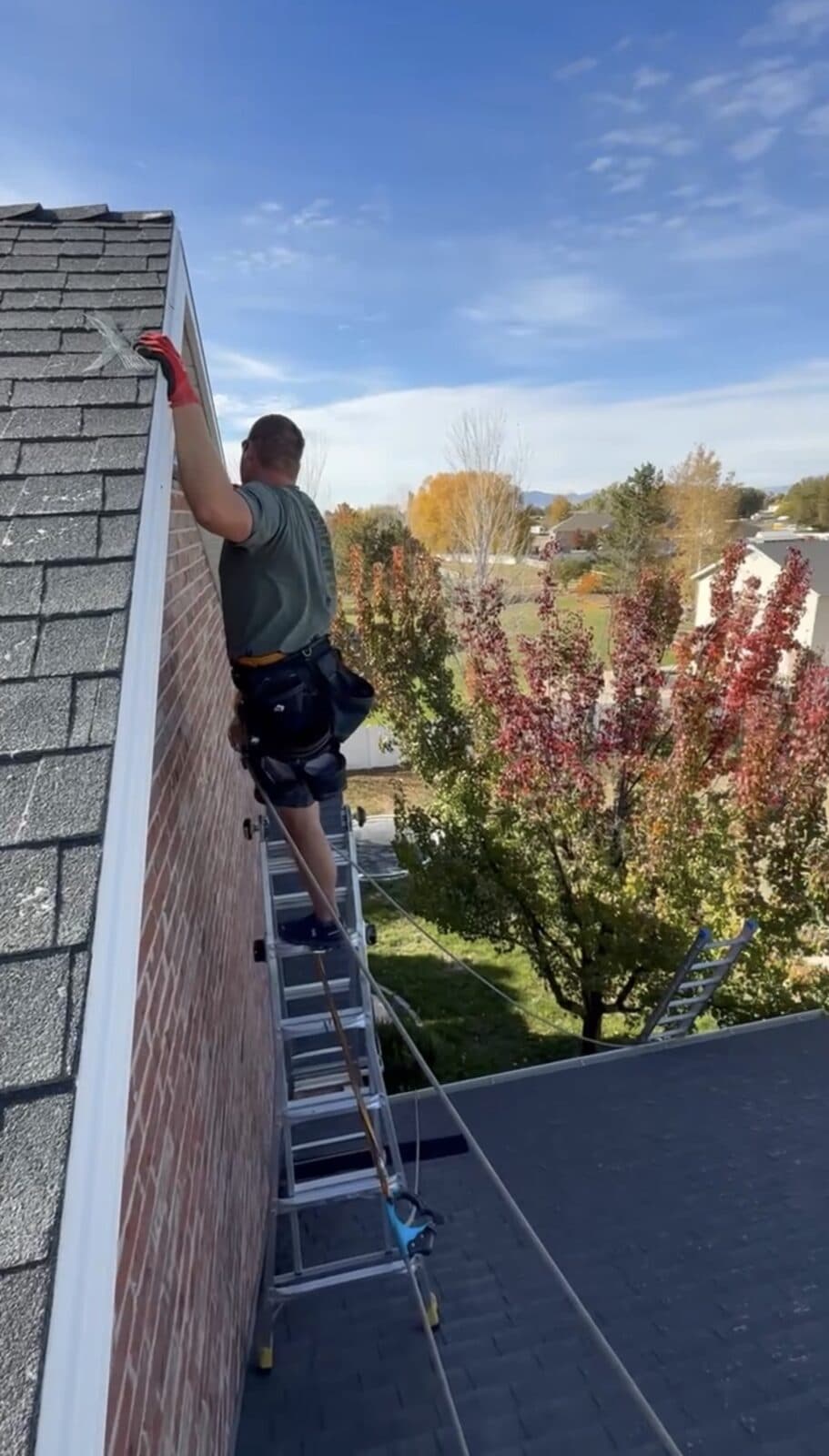
UC IPM lists the usual colony entry points as beneath eaves, around chimneys, around air and plumbing vents, near loose boards, beneath roof caps and through holes other animals have made. It also covers tile roofs specifically. On Torrance homes and buildings, that usually means:
- Open ends of clay or concrete roof tiles along the eaves and ridge, especially where bird stops are missing or broken
- Gaps where fascia boards meet stucco or the roof deck on postwar ranch homes
- Attic and gable vents with torn, loose or missing screens
- Cracks at roof-to-wall transitions, stucco edges and chimney flashing
- Exposed rafter tails, soffits and wood trim on older houses in Old Torrance
- Parapet caps and expansion joints on flat-roof commercial and light-industrial buildings
When bats are most active around Torrance
- Spring and summer
- UC IPM says female bats form colonies in spring to give birth and raise their young, and that flightless young may be present usually from May through September in California. This is when roosts in buildings are busiest, and when colony exclusion should wait.
- Warm evenings
- The museum notes bats are most active on warm nights and are often found near water, though they also forage over neighborhoods and parks. Torrance has open space close to homes, including the Madrona Marsh Preserve, a seasonal wetland, and the hills of the Palos Verdes Peninsula to the south.
- Late fall and winter
- UC IPM notes that most bats leave buildings in late fall in most areas, which makes winter a good time for exclusion. The coast is mild, though, and the museum says migrating Mexican free-tailed bats overwinter in Southern California and hoary bats spend the winter here, so a winter bat sighting in Torrance is possible.
Planning an exclusion? See our fall and winter bat exclusion guide, the maternity season guide or the bat eviction season checker. For what California law allows, read are bats protected in California?
Nearby city pages: Long Beach bat removal, Los Angeles (incl. San Pedro & the Harbor area) bat removal, Inglewood bat removal, Santa Monica bat removal, Huntington Beach bat removal. This Torrance page also covers Redondo Beach, Lomita and the rest of the South Bay.
Torrance roof types & where bats get in
1950s–70s stucco tract homes with composition shingle or concrete tile, Old Torrance bungalows and brick commercial buildings, and industrial flat roofs.
Entry points we check first on Torrance homes:
- gaps where fascia board meets stucco or the roof deck
- clay or concrete tile ridge and eave closures (bird stops missing or broken)
- gable and attic vents with torn or missing screens
- parapet caps, coping and expansion joints on flat or low-slope roofs
- stucco weep screed separations at the foundation line and wall-to-roof transitions
Bats can fit through gaps of about 3/8 inch (California Dept. of Food & Agriculture vertebrate pest handbook). Not sure? Use our signs-you-have-bats checklist.
Torrance climate & bat season
Coastal air keeps Torrance moderate, but stucco and tile homes still trap heat in summer. Bats tend to use warm roof edges and attic pockets during pup season.
Maternity season rules for Torrance bat exclusion
California treats bats as protected nongame mammals, so they may not be killed, poisoned or trapped. Exclusion is the humane, legal route. UC IPM advises against excluding colonies when flightless young could be present, usually May through September in California, because the parents get shut out and the pups starve inside the walls. We inspect and plan during that window, then exclude once the pups can fly. Fall, winter and early spring are the usual exclusion months. The CDFW bats page covers safety and conflict guidance, and you can report a colony to CDFW. Timing source: UC IPM bats. Guano health: CDC on histoplasmosis.
Planning for this fall or winter? Read our fall and winter bat exclusion guide for California timing, and are bats protected in California? for what the law allows.
Is it safe to evict bats now? Check the seasonLocal housing & attic patterns in Torrance
Much of Torrance was built out after a late-1940s housing boom used up nearly all of the city's remaining vacant land (Torrance Historical Society), so the city has a lot of one- and two-story stucco ranch homes with composition-shingle or concrete-tile roofs, boxed eaves and gable or attic vents. Old Torrance, the original 1912 townsite planned by the Olmsted firm, adds older bungalows and brick commercial buildings around downtown. The southern hillsides add custom and view homes with tile roofs and more complex rooflines, and the north and east sides of the city add flat-roof industrial and commercial buildings. Each style leaves different gaps, so we map the whole house and any detached garage when activity spreads.
Bat seasonality around Torrance
Torrance's marine-influenced climate keeps evenings mild for much of the year. Roosts in buildings are busiest in spring and summer, and UC IPM says flightless young may be present usually from May through September in California, so colony exclusion waits until the pups can fly. Some bats stay active through the mild coastal winter, so an inspection is worthwhile in any month if you see signs.
Neighborhoods & landmarks we know
We work across Torrance. That includes Old Torrance and the downtown core around El Prado; Walteria, near the Palos Verdes Peninsula foothills, annexed to Torrance in 1928; the Hollywood Riviera, the hillside area between southern Torrance and Redondo Beach that began as a 1920s Riviera-style development and filled in after World War II (many homes there have Redondo Beach mailing addresses); the large postwar tracts of West Torrance; North Torrance toward the Gardena and Lawndale borders; and the Del Amo and Hawthorne Boulevard commercial corridors.
Why hire a local Southern California crew
South Bay HOAs and property managers want discreet curb appeal after the job. Custom inserts and clear products—not spray foam—keep seals nearly invisible.
- Bat specialists since 2011 — bats are our flagship service
- Documented inspection: openings numbered, photographed, primary vs. secondary
- Targeted repair or whole-structure seal (warranty on whole-structure)
- Humane one-way exclusion · maternity timing per UC IPM (usually May–September)
- High-rise / rope-access capacity for elevated buildings
- We finish failed prior jobs—remove old foam and devices
- Two-year written warranty on sealed whole-structure work
- Local owners, California coverage, backed by a multi-state team
Typical Torrance jobs start with a phone consultation, then an attic inspection, followed by humane exclusion and optional guano cleanup. Commercial properties can use our commercial bat removal program.
Torrance bat removal FAQ
Torrance & South Bay nearby
- Long Beach bat removal
South Bay / Harbor
- Santa Monica bat removal
Westside
- Los Angeles bat removal
Los Angeles Basin
- Inglewood bat removal
South Bay / LA Basin
- Huntington Beach bat removal
Orange County coast
- All service areas
Southern California hub
- Bat removal service
Residential & commercial
- Fall & winter bat exclusion
California exclusion timing
- Are bats protected in California?
Bat laws & legal removal
- Bat eviction season checker
Is it safe to exclude now?
- Signs you have bats
Interactive checklist
- How we work
Process steps
- Warranty
Two-year coverage
- FAQ
Common questions
Bat problems in Torrance? Let's talk.
Humane exclusion for Torrance and the surrounding South Bay. Two-year written warranty on whole-structure work. Same-day often available across Southern California.