
Southeast Los Angeles County · California
Bat removal in Downey, California
Downey—114,355 people on 12.41 square miles of southeast Los Angeles County (2020 Census), between the Rio Hondo and the San Gabriel River—grew from a railroad town into one of the region's first planned suburbs in the 1950s and 1960s, and SCAG's local profile says 72.2% of its homes were built before 1970. Those 55- to 75-year-old rooflines, plus the city's apartment buildings and flat commercial roofs, are where L.A. County's building bats find their way in. California Bat Removal Pros provides humane bat inspection, one-way exclusion, sealing with custom inserts (not spray foam) and optional attic guano cleanup across Downey, with a two-year written warranty on whole-structure work.
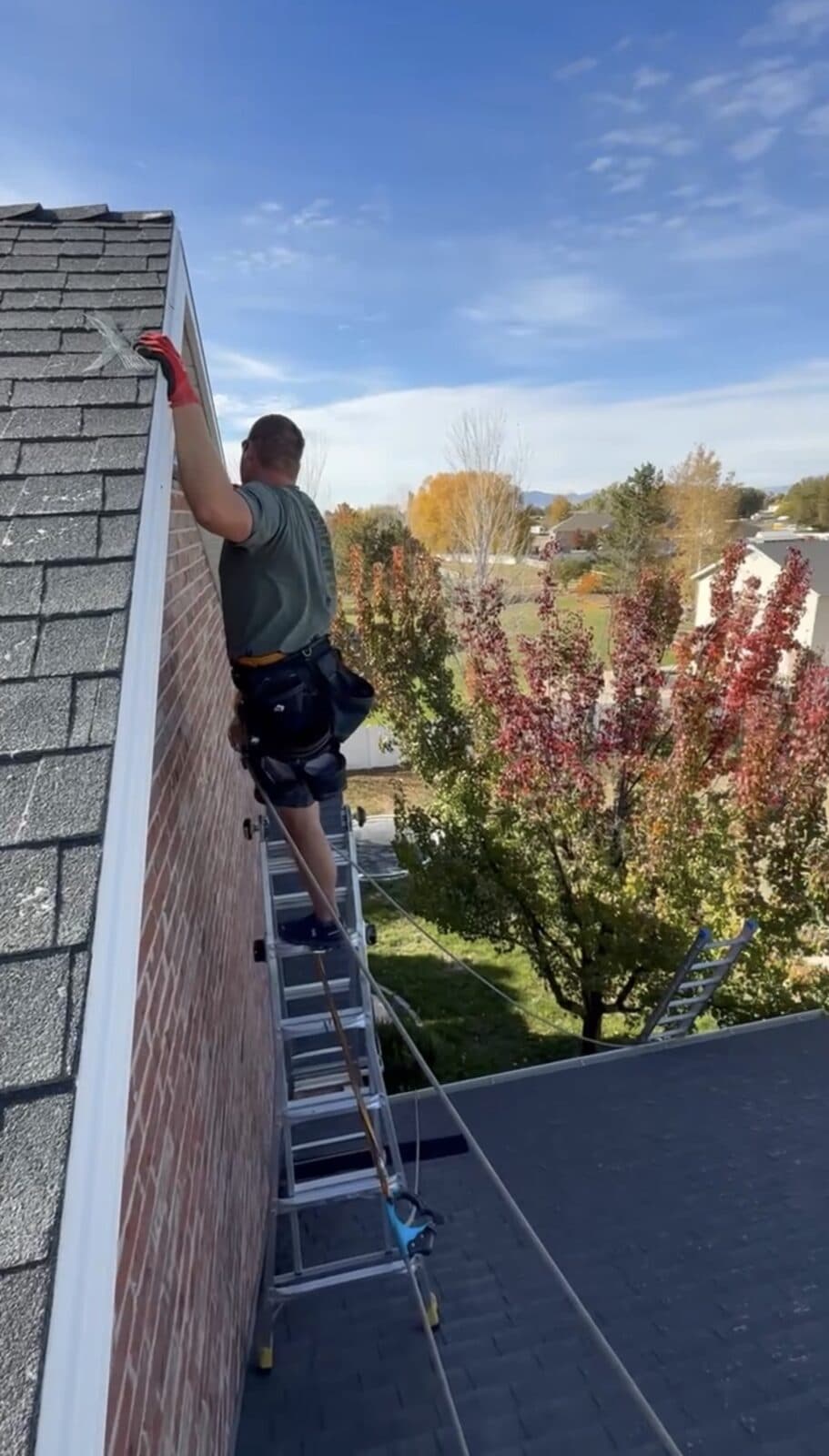
Are there bats in Downey?
Yes. Los Angeles County's Veterinary Public Health program says the county is home to a large number of bats of different species, that bats live in urban and suburban areas, not just the countryside, and that the Mexican free-tailed bat, California myotis, hoary bat and western pipistrelle (now called the canyon bat) are among the most common. The Natural History Museum of Los Angeles County counts bats leaving day roosts along the L.A. River and the San Gabriel River, and Downey sits between the San Gabriel River and the Rio Hondo, the L.A. River tributary on its west side. County-wide, Veterinary Public Health reported a record 77 rabid bats in 2026 by mid-October, ahead of the previous record of 69 in 2025. Most Downey residents only notice bats when droppings, an ammonia smell or a dusk fly-out shows up at their own roofline.
We have not found a published bat survey or a 2026 rabid-bat report for Downey itself. The species below are the ones county and museum sources describe for urban L.A. County, and the rabies figures are county-wide lab results, mostly from sick or grounded bats or bats that came into contact with people or pets; the county says less than 1% of bats in a healthy population have rabies. Which bat is in a particular roof is confirmed at inspection.
Who to call about a bat in Downey
Downey's animal control is SEAACA, the Southeast Area Animal Control Authority, and its headquarters and shelter are in Downey, at 9777 Seaaca Street (562-803-3301, a 24-hour call center). SEAACA was formed in October 1975 as a joint powers authority by Downey, Norwalk and Pico Rivera and now serves 14 cities, and Downey dog licenses are issued through it. SEAACA says it responds to wildlife that is sick, injured or dead, or that has had physical contact with a person or a domestic animal, and that it is not authorized to relocate healthy wildlife; all animal bites are legally reportable to it. For a possible rabies exposure, L.A. County Public Health's Veterinary Public Health program gives exposure consultations at 213-288-7060 (weekdays 8 a.m.–5 p.m.; after hours, 213-240-7941 for the physician on call). The county says a bat found indoors should not be released until you have talked with public health if there is any chance it touched someone: close off the room, cover the bat with a container if it is safe and call SEAACA to collect it for testing. If anyone was bitten, scratched or may have had contact, wash the area with soap and water and get medical care promptly. A healthy colony living in a roof or wall is not a SEAACA pickup; it is handled by one-way exclusion.
Bat species most relevant to Downey homes
- Mexican free-tailed bat (Tadarida brasiliensis): Named by L.A. County Veterinary Public Health as one of the county's most common bats, and by the Natural History Museum as the most common bat in the L.A. area. It forms colonies in tight, hot gaps: behind fascia, under tile and in the expansion joints of flat commercial roofs along Firestone and Lakewood boulevards.
- Canyon bat (western pipistrelle) (Parastrellus hesperus): Listed by the county among its most common bats and described by the museum as the smallest bat in the L.A. area. It emerges early in the evening and mostly uses crevices, occasionally in buildings.
- California myotis (Myotis californicus): Another of the county's common species and, according to the museum, associated with riparian areas such as the L.A. River system, which includes the Rio Hondo along Downey's west side.
- Yuma myotis (Myotis yumanensis): The museum says it is strongly tied to rivers and other water and roosts in buildings, under bridges and in other human-made structures, which makes homes near the San Gabriel River, the Rio Hondo and the lakes at Wilderness Park relevant.
- Big brown bat (Eptesicus fuscus): A classic attic and wall-void bat across North America. CDFW's habitat account says it uses buildings so heavily that its natural roosting habits are poorly known; the museum notes it shows up in L.A. backyard surveys less often than expected.
- Hoary bat (Lasiurus cinereus): One of the county's common species, but a tree-roosting migrant that the museum says winters in Southern California. It roosts in foliage, not attics, so it is rarely the cause of a building problem.
More detail: California bat species guide.
Where bats get into Downey's postwar homes and commercial roofs
Downey was settled as a railroad town in 1873 and named for former Governor John Gately Downey; the City says it incorporated on December 17, 1956. Its Housing Element says growth in the 1950s and 1960s made it one of the first suburban planned communities, and SCAG's local profile puts 72.2% of the housing stock as built before 1970. Of 35,838 homes in 2020, the Housing Element counts 20,448 single-family detached (57.1%), 1,583 attached, 13,439 multifamily units (37.5%) and 368 mobile homes and other units, with 189 mobile homes in four parks. UC IPM lists the usual colony entry points as beneath eaves, around chimneys, around air and plumbing vents, near loose boards and beneath roof caps, and says bats can squeeze through openings as small as about 1/4 inch. On Downey buildings we check first:
- Fascia-to-stucco gaps, shrunken fascia and trim, and gable and attic vents with torn screens on 1950s–60s single-story ranch and tract homes
- Chimney chases and flashing, stucco weep screeds and old roof-to-wall transitions where postwar homes have been added onto
- Open tile ends, ridge caps and tile-to-stucco joints on re-roofed and newer tile homes
- Shared attics and long eave runs on apartment buildings and townhomes, which hold more than a third of the city's homes
- Parapets, coping, expansion joints and rooftop equipment curbs on flat commercial roofs along Firestone Boulevard, Lakewood Boulevard and the I-5 and I-605 corridors
When bats are most active around Downey
- Spring and summer (maternity)
- UC IPM says flightless young may be present usually from May through September in California, and L.A. County Veterinary Public Health asks residents to avoid exclusion in the summer months (May–August) because the young inside can't leave and will die. This is when roosts in buildings are busiest, and when colony exclusion should wait.
- Late summer and fall rabies peak
- L.A. County Public Health's September 2026 health advisory says 451 bat encounters were reported in the county in 2025, a third of them indoors, and that 19% of bats tested were positive overall, rising to 30% in the fall. Those are bats submitted after contact with people or pets, not bats in general, but it is why a fall bat inside a Downey home should be contained and tested rather than released.
- Late fall and winter (the usual exclusion window)
- The county says late fall and winter are the best time to bat-proof a home, and recommends checking for openings 1/4 by 1/2 inch or larger. It also reminds residents that it is illegal to keep, injure or kill bats, including while getting them out of a house, so we use one-way devices and permanent sealing rather than trapping or sealing bats in.
Planning an exclusion? See our fall and winter bat exclusion guide, the maternity season guide or the bat eviction season checker. For what California law allows, read are bats protected in California?
Nearby city pages: Lakewood bat removal, Whittier bat removal, Norwalk bat removal, Cerritos bat removal, Long Beach bat removal, Buena Park bat removal, El Monte bat removal, Los Angeles bat removal. This Downey page covers the whole city, from the neighborhoods north of Florence Avenue and around Furman and Apollo parks to downtown Downey, the blocks south of Firestone Boulevard, the Rancho Los Amigos area and the homes along the San Gabriel River, plus neighboring Norwalk, Bellflower and Pico Rivera. For apartment, condo and mobile home communities we document the scope with photos and match closures to the existing stucco, trim and tile.
Sources
- L.A. County Public Health, Veterinary Public Health: Bats in Los Angeles County
- L.A. County Public Health: Health Advisory, Significant Increase in Rabid Bats (Sept. 4, 2026; updated Oct. 22, 2026)
- L.A. County Veterinary Public Health: Rabies Data Dashboard 2026
- L.A. County Veterinary Public Health: Animal Health Advisory, record rabid bat detections (Oct. 9, 2026)
- L.A. County Veterinary Public Health: home page (2026 rabid bat count)
- Natural History Museum of L.A. County: Backyard Bats and Bat Roost Count
- SEAACA: Southeast Area Animal Control Authority
- SEAACA: History of SEAACA
- SEAACA: Wildlife
- SEAACA: Animal Bites
- City of Downey: Dog License (issued through SEAACA)
- City of Downey: City History & Profile
- City of Downey: 2021–2029 Housing Element
- SCAG: Local Profile, City of Downey
- U.S. Census Bureau QuickFacts: Downey city, California
- City of Downey: Wilderness Park
- Greater Los Angeles County Vector Control District: Overview
- CDFW CWHR: Big brown bat life history account
- UC IPM Pest Notes: Bats
- CDC: Preventing Rabies from Bats
Downey roof types & where bats get in
Single-story 1950s–60s stucco ranch and tract homes (the Housing Element counts 20,448 detached single-family houses, 57% of the city's homes), apartment and townhome buildings (about 37% of homes), four mobile home parks, re-roofed tile homes, and flat commercial roofs along Firestone and Lakewood boulevards and the I-5 and I-605 corridors.
Entry points we check first on Downey homes:
- gaps where fascia board meets stucco or the roof deck
- gable and attic vents with torn or missing screens
- chimney chases and flashing
- stucco weep screed separations at the foundation line and wall-to-roof transitions
- clay or concrete tile ridge and eave closures (bird stops missing or broken)
- parapet caps, coping and expansion joints on flat or low-slope roofs
Bats can fit through gaps of about 3/8 inch (California Dept. of Food & Agriculture vertebrate pest handbook). Not sure? Use our signs-you-have-bats checklist.
Downey climate & bat season
Downey sits on the flat floor of southeast Los Angeles County between the Rio Hondo and the San Gabriel River, warmer in summer than the coast with mild winters. Hot attics over postwar homes suit summer colonies; late fall and winter are the usual exclusion months.
Maternity season rules for Downey bat exclusion
California treats bats as protected nongame mammals, so they may not be killed, poisoned or trapped. Exclusion is the humane, legal route. UC IPM advises against excluding colonies when flightless young could be present, usually May through September in California, because the parents get shut out and the pups starve inside the walls. We inspect and plan during that window, then exclude once the pups can fly. Fall, winter and early spring are the usual exclusion months. The CDFW bats page covers safety and conflict guidance, and you can report a colony to CDFW. Timing source: UC IPM bats. Guano health: CDC on histoplasmosis.
Planning for this fall or winter? Read our fall and winter bat exclusion guide for California timing, and are bats protected in California? for what the law allows.
Is it safe to evict bats now? Check the seasonLocal housing & attic patterns in Downey
The City says Downey was founded in 1873 along the new railroad, named for former Governor John Gately Downey, and incorporated on December 17, 1956. Its 2021–2029 Housing Element describes how growth in the 1950s and 1960s made it one of the first suburban planned communities, and counts 35,838 homes in 2020: 20,448 detached single-family houses (57.1%), 1,583 attached single-family homes, 13,439 units in multifamily buildings (37.5%) and 368 mobile homes and other units, including 189 mobile homes in four parks. In practice that means block after block of one-story stucco ranch and tract homes with original or once-replaced fascia, gable and attic vents and chimney flashing; postwar houses that have been added onto, leaving roof-to-wall seams; re-roofed tile homes; apartment and townhome buildings with long shared eaves; and flat commercial roofs with parapets and expansion joints along Firestone and Lakewood boulevards. UC IPM says the bats that most often use structures in California urban areas are Mexican free-tailed bats, big brown bats, Yuma myotis and other Myotis, and pallid bats, and that bats can squeeze through openings as small as about 1/4 inch. We confirm the species and map every entry point before any exclusion device goes on.
Bat seasonality around Downey
UC IPM advises against excluding a colony while flightless young may be present, usually May through September in California, and L.A. County Public Health says late fall and winter are the best time to bat-proof a home, so those months are the usual Downey exclusion window. Rabies is the other seasonal story: L.A. County Veterinary Public Health reported a record 77 rabid bats county-wide in 2026 by mid-October, and its September 2026 health advisory says 30% of the bats tested in fall 2025 were positive. Those are lab results from sick or grounded bats and bats that touched people or pets, not a count of bats in Downey, but they are why a bat found inside a home should be contained and reported rather than released. Winters are mild here, so call any month if you hear scratching, smell ammonia or find droppings.
Neighborhoods & landmarks we know
We cover all of Downey: the neighborhoods north of Florence Avenue and around Furman and Apollo parks, downtown Downey and the civic center, the blocks around the 1953 McDonald's at Lakewood Boulevard and Florence Avenue (the oldest operating McDonald's), the Rancho Los Amigos area, the Columbia Memorial Space Center neighborhood on the former NASA and Boeing site, the tracts south of Firestone Boulevard and the homes along the San Gabriel River and Rio Hondo. We also serve neighboring Norwalk, Bellflower and Pico Rivera. Wilderness Park, with two fishing lakes on Little Lake Road, Rio San Gabriel Park and the river channels on both sides of the city give bats water and insects to hunt, without implying a roost on any specific property. Nearby city pages cover Lakewood, Whittier, Cerritos, Long Beach, Buena Park and El Monte.
Why hire a local Southern California crew
Downey's animal control is SEAACA, the Southeast Area Animal Control Authority, which Downey helped found in 1975 and which is headquartered in the city on Seaaca Street. SEAACA says it handles wildlife that is sick, injured, dead or has had contact with a person or pet, and that it is not authorized to relocate healthy wildlife, so a colony living in a roof or wall falls to private exclusion. Because so much of Downey was built in the same two decades, homes on a street often share the same construction details and the same weak spots. With more than a third of the city's homes in apartment and condo buildings and four mobile home parks, we often work with owners, managers and HOAs, so we provide photo documentation and a written scope and match closures to the existing stucco, trim and tile.
- Bat specialists since 2011 — bats are our flagship service
- Documented inspection: openings numbered, photographed, primary vs. secondary
- Targeted repair or whole-structure seal (warranty on whole-structure)
- Humane one-way exclusion · maternity timing per UC IPM (usually May–September)
- High-rise / rope-access capacity for elevated buildings
- We finish failed prior jobs—remove old foam and devices
- Two-year written warranty on sealed whole-structure work
- Local owners, California coverage, backed by a multi-state team
Typical Downey jobs start with a phone consultation, then an attic inspection, followed by humane exclusion and optional guano cleanup. Commercial properties can use our commercial bat removal program.
Downey bat removal FAQ
Downey & nearby cities
- Lakewood bat removal
Southeast Los Angeles County
- Whittier bat removal
Southeast Los Angeles County
- Norwalk bat removal
Southeast Los Angeles County
- Cerritos bat removal
Southeast Los Angeles County
- Long Beach bat removal
South Bay / Harbor
- Buena Park bat removal
Orange County
- All service areas
Southern California hub
- Bat removal service
Residential & commercial
- Fall & winter bat exclusion
California exclusion timing
- Are bats protected in California?
Bat laws & legal removal
- Bat eviction season checker
Is it safe to exclude now?
- Signs you have bats
Interactive checklist
- How we work
Process steps
- Warranty
Two-year coverage
- FAQ
Common questions
Bat problems in Downey? Let's talk.
Humane exclusion for Downey and the surrounding Southeast Los Angeles County. Two-year written warranty on whole-structure work. Same-day often available across Southern California.