
Southeast Los Angeles County · California
Bat removal in Whittier, California
Whittier, a city of 87,306 people on 14.65 square miles (2020 Census) at the foot of the Puente Hills, is one of the oldest towns in southeast Los Angeles County: it was founded as a Quaker colony in 1887 and incorporated in 1898. SCAG's local profile says 82.4% of its homes were built before 1970, and the Puente Hills Habitat Authority's surveys of the hills just above town recorded ten bat species. California Bat Removal Pros provides humane bat inspection, one-way exclusion, sealing with custom inserts (not spray foam) and optional attic guano cleanup across Whittier, with a two-year written warranty on whole-structure work.
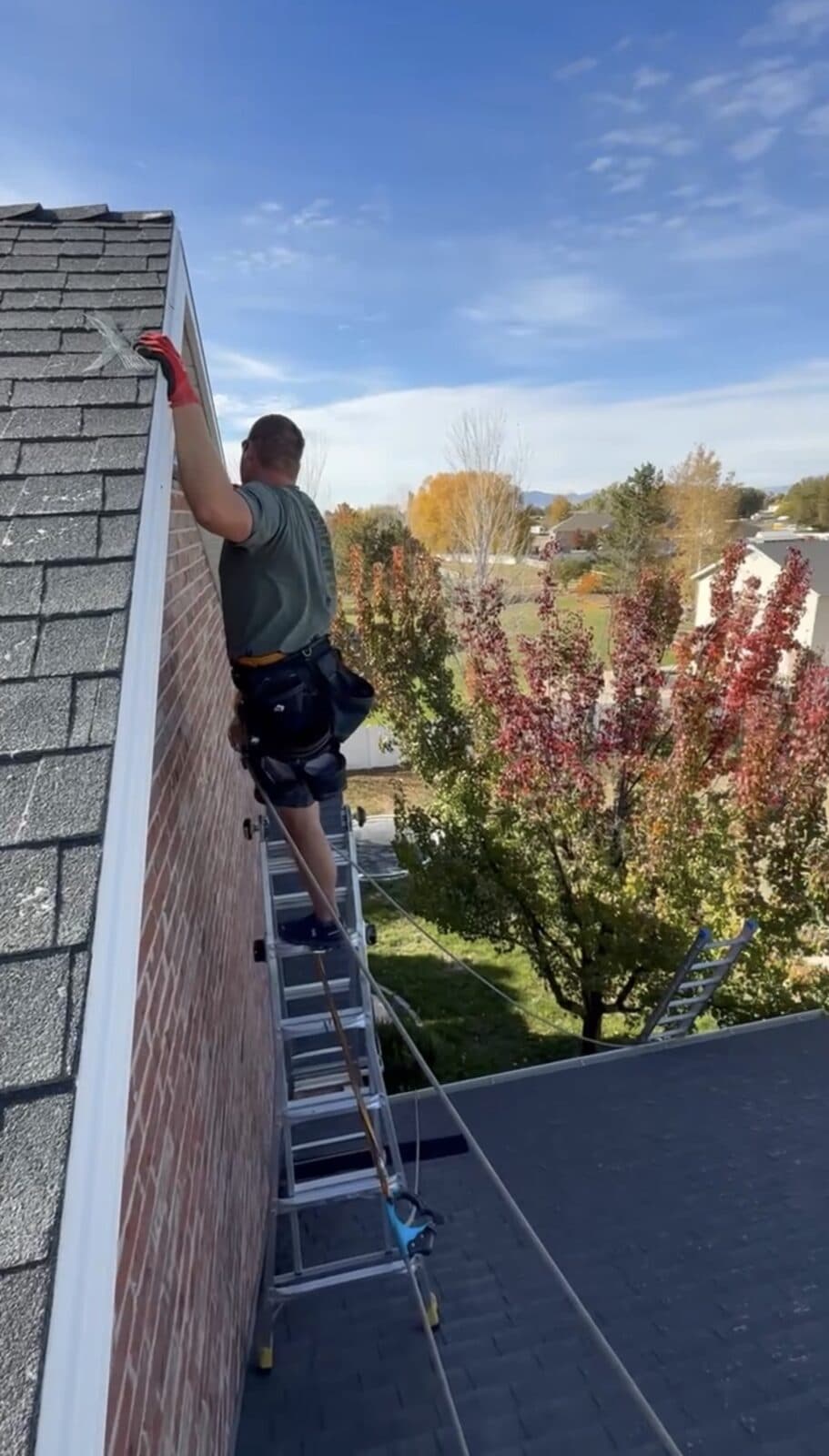
Are there bats in Whittier?
Yes, and Whittier is one of the few cities in our area with published local bat surveys. The Puente Hills Habitat Preservation Authority, based in Whittier, commissioned acoustic bat surveys of the Puente Hills Preserve from June 2005 to May 2006: ten species were detected, nine of them within an hour of sunset, which the biologist said meant they were roosting nearby, and Turnbull Canyon and Sycamore Canyon had by far the highest diversity and activity. A 2011 survey for the City-approved Whittier Matrix Oil project on the Preserve recorded all ten species again, with Mexican free-tailed bats making up 77% of identifiable calls. L.A. County Veterinary Public Health says bats live in urban and suburban parts of the county, too, and reported a record 77 rabid bats county-wide in 2026 by mid-October. So bats forage over Whittier's hills every night of the year, and the city's older wood-eaved homes give them plenty of places to roost.
The Habitat Authority surveys covered the open space of the Puente Hills, not Whittier's houses, and found no large maternity colony at the 2011 oil-project site. The rabies figures are county-wide lab results, mostly from sick or grounded bats or bats that touched people or pets; the county says less than 1% of bats in a healthy population have rabies. We have not found a 2026 rabid-bat report from Whittier itself. Which bat is in a particular roof is confirmed at inspection.
Who to call about a bat in Whittier
Whittier does not use SEAACA. The City says it contracts with Los Angeles County Animal Care and Control for animal-related services and licensing, and its animal control FAQ lists the Downey Animal Care Center at 11258 S. Garfield Avenue in Downey (between Imperial Highway and Gardendale Street), 562-940-6898, which also takes 24-hour dispatch calls. The City's own part-time Wildlife Management Coordinator (Human Resources and Risk Management, 562-567-9830) works on coyotes, not bats. For a possible rabies exposure, L.A. County Public Health's Veterinary Public Health program gives consultations at 213-288-7060 (weekdays 8 a.m.–5 p.m.; after hours, 213-240-7941 for the physician on call). The county says not to release a bat found indoors if there is any chance it touched someone: close off the room, cover it with a container if it's safe, and call animal control to collect it for testing. If anyone was bitten, scratched or may have had contact, wash the area with soap and water and get medical care promptly. A healthy colony in a roof or wall is not an animal-control pickup; it is handled by one-way exclusion.
Bat species documented in the Puente Hills above Whittier
- Mexican free-tailed bat (Tadarida brasiliensis): By far the most commonly recorded bat in the 2011 Whittier Matrix Oil survey (77% of identifiable calls) and detected in 10 of 12 months in the 2005–06 Puente Hills study. It is also the bat most likely to colonize tight, hot gaps in buildings, such as fascia joints, tile ends and flat-roof expansion joints.
- Big brown bat (Eptesicus fuscus): The second most commonly recorded species in the 2011 survey and common at six of twelve sites in spring, summer and early fall in 2005–06, but not detected in late fall and winter, when the biologist said it may be hibernating or migrating. CDFW says it uses buildings so heavily that its natural roosts are poorly known; it is a classic attic and wall-void bat.
- Canyon bat (western pipistrelle) (Parastrellus hesperus): Detected in every month but March in 2005–06, but only in Turnbull and Sycamore canyons, the two most Whittier-adjacent survey areas. It is small, emerges early in the evening and usually roosts in rock crevices rather than houses.
- Yuma myotis (Myotis yumanensis): Recorded in the Puente Hills in 2004 and 2005–06. It feeds low over water and, according to the Natural History Museum, often roosts in buildings and under bridges.
- Western red, western yellow and hoary bats (Lasiurus blossevillii, L. xanthinus, L. cinereus): Tree- and foliage-roosting bats recorded in Turnbull Canyon in 2005–06. The 2011 survey says hoary and western yellow bats appeared to be day-roosting near the oil-project site, with hoary bats present through the summer, which it called unusual for the region. They roost in trees and palm skirts, not attics.
- Pocketed free-tailed and western mastiff bats (Nyctinomops femorosaccus, Eumops perotis): Two California Species of Special Concern recorded over the Puente Hills. They roost in cliffs and high crevices and forage high and far, so they are part of Whittier's night sky rather than a household problem.
More detail: California bat species guide.
Where bats get into Whittier homes
Whittier is older than most of southeast L.A. County. The City says it began in 1887, when the Pickering Land and Water Company bought the 1,259-acre Thomas Ranch for a Quaker colony named for poet John Greenleaf Whittier, and it incorporated in 1898. Four local historic districts protect much of the early housing: Hadley-Greenleaf and Central Park (both 1990), College Hills (2002) and Earlham (2011). The City's style guide describes Whittier's Craftsman houses of 1905–1930 as having low-pitched roofs, wide eaves and exposed rafters, and its local register also lists Victorian, Spanish and Mediterranean Revival, Colonial, Tudor and California Ranch homes. SCAG's local profile says 82.4% of Whittier's 29,713 homes were built before 1970, and 65.2% are single-family detached houses. The 1987 Whittier Narrows earthquake destroyed 34 Uptown buildings, about half the district, so many Uptown roofs and parapets are rebuilds or retrofits. UC IPM lists the usual colony entry points as beneath eaves, around chimneys, around air and plumbing vents, near loose boards and beneath roof caps, and says bats can fit through gaps of about 1/4 inch. On Whittier homes we check first:
- Open spaces between exposed rafter tails and frieze or bird blocks on Craftsman and bungalow eaves in Hadley-Greenleaf, Central Park and the streets around Uptown
- Shrunken or split wood siding, shingle and trim joints, and gaps where wood siding meets stucco additions
- Open tile ends and ridge caps on Spanish and Mediterranean Revival homes in College Hills and near Whittier College
- Brick and stucco chimney chases and flashing, including chimneys rebuilt or braced after the 1987 earthquake
- Gable and attic vents with torn screens, and roof-to-wall seams on remodeled ranch homes in East Whittier and the hillside tracts
- Parapets, coping and expansion joints on Uptown commercial buildings along Greenleaf Avenue and Philadelphia Street and flat roofs along Whittier Boulevard
When bats are most active around Whittier
- Year-round over the Puente Hills
- The 2005–06 survey detected Mexican free-tailed bats in 10 of 12 months and canyon bats in 11, and it found the highest activity in spring and summer. Turnbull Canyon, reached from a gated Habitat Authority trailhead off Turnbull Canyon Road, and Sycamore Canyon had by far the highest bat diversity and activity of the sites surveyed. Seeing bats at dusk on a hillside street is normal and does not by itself mean they are in your house.
- Spring and summer (maternity)
- UC IPM says flightless young may be present usually from May through September in California, and L.A. County Veterinary Public Health asks residents not to exclude bats in the summer months (May–August) because the young inside can't leave and will die. Big brown bats, the most likely house bat after free-tails, were active in the Puente Hills mainly from spring to early fall.
- Fall rabies peak, then the winter exclusion window
- L.A. County Public Health's September 2026 advisory says 19% of bats tested in 2025 were positive overall, rising to 30% in the fall, among bats submitted after contact with people or pets. The county says late fall and winter are the best time to bat-proof a home and recommends checking for openings 1/4 by 1/2 inch or larger. It is illegal to keep, injure or kill bats, so we use one-way devices and permanent sealing; no bat is sealed inside.
Planning an exclusion? See our fall and winter bat exclusion guide, the maternity season guide or the bat eviction season checker. For what California law allows, read are bats protected in California?
Nearby city pages: Norwalk bat removal, Downey bat removal, Lakewood bat removal, Fullerton bat removal, Buena Park bat removal, El Monte bat removal, La Mirada bat removal, La Habra bat removal. This Whittier page covers the whole city, from Uptown and the Hadley-Greenleaf, Central Park, College Hills and Earlham historic districts to Friendly Hills, East Whittier, the Whittier Boulevard corridor and the hillside streets below Turnbull Canyon and Hellman Park, plus neighboring South Whittier, West Whittier–Los Nietos, La Habra Heights and Hacienda Heights.
Sources
- City of Whittier: Animal Control (contract with L.A. County Animal Care and Control)
- City of Whittier: Animal Control FAQs (Downey Animal Care Center)
- City of Whittier: Wildlife Management (coyotes)
- L.A. County Public Health, Veterinary Public Health: Bats in Los Angeles County
- L.A. County Public Health: Health Advisory, Significant Increase in Rabid Bats (Sept. 4, 2026; updated Oct. 22, 2026)
- L.A. County Veterinary Public Health: Rabies Data Dashboard 2026
- L.A. County Veterinary Public Health: home page (2026 rabid bat count)
- Puente Hills Habitat Authority: Bat Surveys of the Puente Hills, 2005–2006 (S. Remington)
- Puente Hills Habitat Authority: Bat Surveys of the Proposed Whittier Matrix Oil Project, 2011
- Puente Hills Habitat Authority: Turnbull Canyon
- Puente Hills Habitat Authority: Hellman Park
- City of Whittier: About Whittier
- City of Whittier: A Brief History of Whittier to 1970
- City of Whittier: Whittier's Historic Districts
- City of Whittier: Official Local Register of Historic Resources
- City of Whittier: Craftsman (Arts and Crafts) 1905–1930
- Uptown Whittier Improvement Association: History of Uptown Whittier
- Los Angeles Times: Uptown Whittier after the 1987 earthquake (1990)
- USGS Open-File Report 87-621: The Whittier Narrows earthquake of October 1, 1987
- SCAG: Local Profile, City of Whittier
- U.S. Census Bureau QuickFacts: Whittier city, California
- Greater Los Angeles County Vector Control District: Overview
- CDFW CWHR: Big brown bat life history account
- UC IPM Pest Notes: Bats
Whittier roof types & where bats get in
Craftsman bungalows (1905–1930) with wide eaves and exposed rafters and Spanish Colonial Revival homes with tile roofs in the Hadley-Greenleaf, Central Park, College Hills and Earlham historic districts; Uptown commercial buildings with parapets, many rebuilt or retrofitted after the 1987 Whittier Narrows earthquake; postwar ranch tracts in East Whittier; and hillside homes below the Puente Hills (SCAG counts 82.4% of Whittier's homes as built before 1970).
Entry points we check first on Whittier homes:
- open or loose soffit panels and rafter tails
- gaps behind wood siding, trim and porch roof tie-ins
- clay or concrete tile ridge and eave closures (bird stops missing or broken)
- chimney chases and flashing
- gable and attic vents with torn or missing screens
- parapet caps, coping and expansion joints on flat or low-slope roofs
Bats can fit through gaps of about 3/8 inch (California Dept. of Food & Agriculture vertebrate pest handbook). Not sure? Use our signs-you-have-bats checklist.
Whittier climate & bat season
Whittier sits at the foot of the Puente Hills on the inland edge of the L.A. Basin, with warm to hot summers and mild winters. Bat activity over the hills peaks in spring and summer, when hot attics suit maternity colonies; late fall and winter are the usual exclusion months.
Maternity season rules for Whittier bat exclusion
California treats bats as protected nongame mammals, so they may not be killed, poisoned or trapped. Exclusion is the humane, legal route. UC IPM advises against excluding colonies when flightless young could be present, usually May through September in California, because the parents get shut out and the pups starve inside the walls. We inspect and plan during that window, then exclude once the pups can fly. Fall, winter and early spring are the usual exclusion months. The CDFW bats page covers safety and conflict guidance, and you can report a colony to CDFW. Timing source: UC IPM bats. Guano health: CDC on histoplasmosis.
Planning for this fall or winter? Read our fall and winter bat exclusion guide for California timing, and are bats protected in California? for what the law allows.
Is it safe to evict bats now? Check the seasonLocal housing & attic patterns in Whittier
The City's history says the Pickering Land and Water Company bought the 1,259-acre Thomas Ranch in 1887 and laid out a Quaker colony named for poet John Greenleaf Whittier; Uptown, around Greenleaf Avenue and Philadelphia Street, has been the commercial center since 1888. Four local historic districts protect much of the early housing: Hadley-Greenleaf and Central Park (both 1990), College Hills (2002) and Earlham (2011). The City's style guide describes Whittier's Craftsman houses of 1905–1930 as having low-pitched roofs with wide eaves and exposed rafters, and its local register also includes Victorian, Spanish Colonial and Mediterranean Revival, Tudor and California Ranch homes. Postwar tracts then filled East Whittier and the hillsides. SCAG counts 29,713 homes: 65.2% single-family detached, 4.2% attached, 7.8% in two- to four-unit buildings, 22.1% in buildings of five or more units and 193 mobile homes, and the Census reports 57.9% owner-occupied. The October 1, 1987 Whittier Narrows earthquake destroyed 34 Uptown buildings and severely damaged 23 more, so many Uptown roofs, parapets and chimneys are rebuilds or retrofits. For bats, that adds up to open rafter bays, aging wood siding and trim, tile ends, chimney flashing and commercial parapets. UC IPM says bats can squeeze through openings as small as about 1/4 inch, so we confirm the species and map every entry point before any exclusion device goes on.
Bat seasonality around Whittier
In the Habitat Authority's 2005–06 survey, bat activity in the Puente Hills peaked in spring and summer, Mexican free-tailed bats were detected in 10 of 12 months, and big brown bats, the classic attic bat, were active from spring to early fall. UC IPM advises against excluding a colony while flightless young may be present, usually May through September in California, and L.A. County Public Health says late fall and winter are the best time to bat-proof a home, so those months are the usual Whittier exclusion window. L.A. County Veterinary Public Health reported a record 77 rabid bats county-wide in 2026 by mid-October; those are lab results from sick or grounded bats and bats that touched people or pets, not a count of bats in Whittier, but they are why a bat found inside a home should be contained and reported rather than released.
Neighborhoods & landmarks we know
We cover all of Whittier: Uptown and the Hadley-Greenleaf, Central Park, College Hills and Earlham historic districts around Whittier College; Friendly Hills and the hillside streets below Turnbull Canyon and Hellman Park; East Whittier and the Whittier Boulevard corridor; and the neighborhoods near the Whittier Greenway Trail. We also serve unincorporated South Whittier and West Whittier–Los Nietos, La Habra Heights and Hacienda Heights. The Habitat Authority, headquartered on Greenleaf Avenue, manages the Puente Hills Preserve above the city, and its surveys found the highest bat diversity in Turnbull and Sycamore canyons. That explains the dusk activity on hillside streets without implying a roost on any specific property. Nearby city pages cover Norwalk, Downey, Lakewood, Fullerton and Buena Park.
Why hire a local Southern California crew
Whittier is not a SEAACA city. It contracts with Los Angeles County Animal Care and Control, whose Downey Animal Care Center (562-940-6898) handles a bat that is sick, injured, dead or has touched a person or pet, but not a healthy colony in a roof. Many Whittier homes are in historic districts, where exterior changes are reviewed by the City, so our closures are built to disappear: wood blocking and screen cut to fit between rafter tails, trim-matched or clear materials on siding and tile, and no spray foam. Every closure is photographed, and you get a written scope before any work begins.
- Bat specialists since 2011 — bats are our flagship service
- Documented inspection: openings numbered, photographed, primary vs. secondary
- Targeted repair or whole-structure seal (warranty on whole-structure)
- Humane one-way exclusion · maternity timing per UC IPM (usually May–September)
- High-rise / rope-access capacity for elevated buildings
- We finish failed prior jobs—remove old foam and devices
- Two-year written warranty on sealed whole-structure work
- Local owners, California coverage, backed by a multi-state team
Typical Whittier jobs start with a phone consultation, then an attic inspection, followed by humane exclusion and optional guano cleanup. Commercial properties can use our commercial bat removal program.
Whittier bat removal FAQ
Whittier & nearby cities
- Norwalk bat removal
Southeast Los Angeles County
- La Mirada bat removal
Southeast Los Angeles County
- La Habra bat removal
North Orange County
- Downey bat removal
Southeast Los Angeles County
- Lakewood bat removal
Southeast Los Angeles County
- Fullerton bat removal
North Orange County
- All service areas
Southern California hub
- Bat removal service
Residential & commercial
- Fall & winter bat exclusion
California exclusion timing
- Are bats protected in California?
Bat laws & legal removal
- Bat eviction season checker
Is it safe to exclude now?
- Signs you have bats
Interactive checklist
- How we work
Process steps
- Warranty
Two-year coverage
- FAQ
Common questions
Bat problems in Whittier? Let's talk.
Humane exclusion for Whittier and the surrounding Southeast Los Angeles County. Two-year written warranty on whole-structure work. Same-day often available across Southern California.