
Orange County · California
Bat removal in Santa Ana, California
Hearing scratching above a Floral Park ceiling at dusk? Finding droppings under the eaves of a French Park Victorian, or a bat inside a midtown home? California Bat Removal Pros provides humane bat removal across Santa Ana—inspection, one-way exclusion, sealing with custom inserts (not spray foam) and optional attic guano cleanup, with a two-year written warranty on whole-structure work.
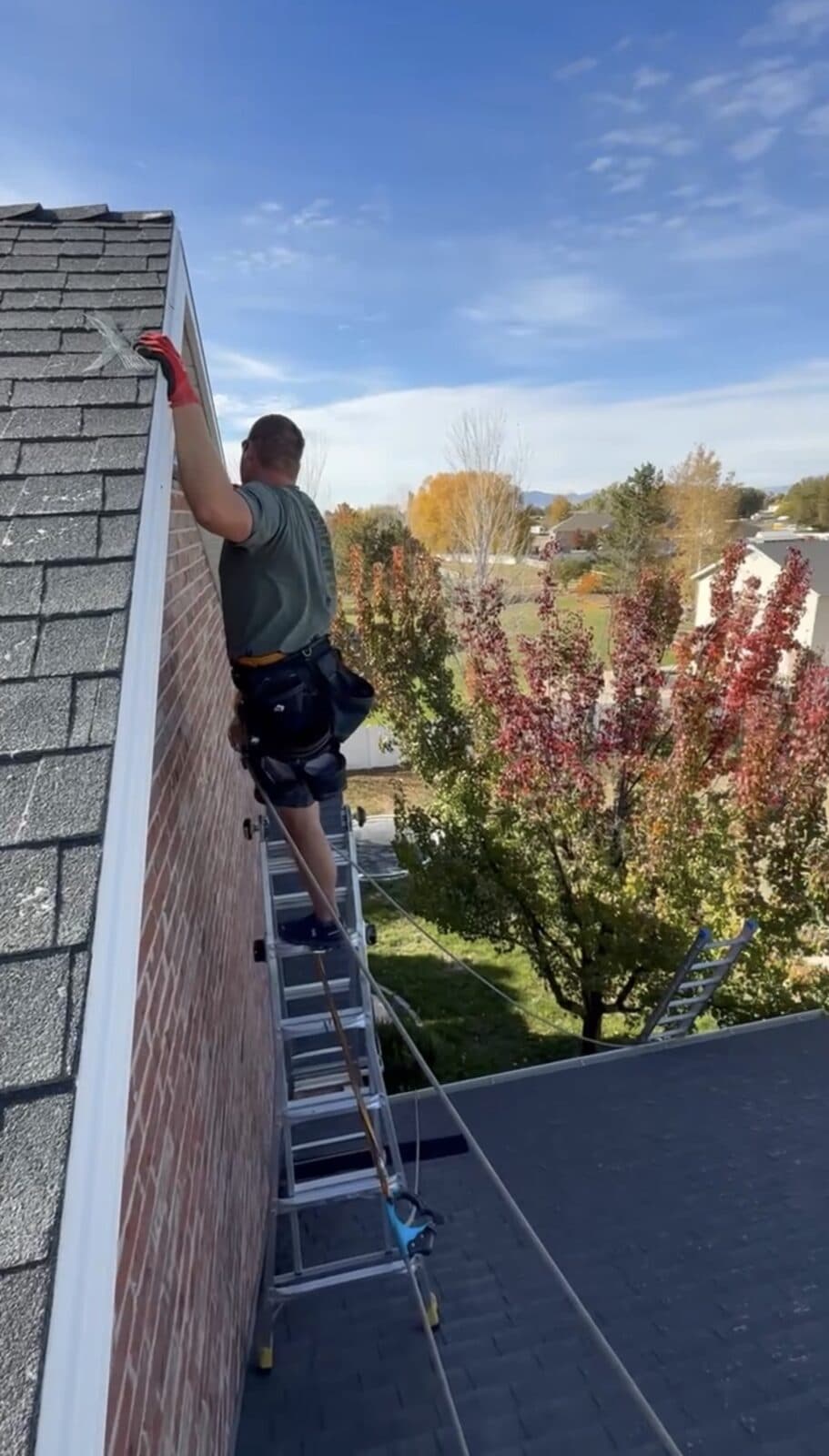
Are there bats in Santa Ana?
Yes. Sea and Sage Audubon says sixteen bat species occur in Orange County and names the Mexican free-tailed bat, Yuma myotis and big brown bat as the three most common, all of which roost in buildings as well as natural sites. In Santa Ana, the nearest water corridors are the Santa Ana River on its west side and Santiago Creek, which runs past Floral Park to the river. The California Department of Public Health's provisional 2026 table lists 31 rabid bats in Orange County from January 1 through October 14, and the OC Health Care Agency's 2026 alerts include bats found in Fullerton, Irvine Regional Park and Irvine. Most residents only notice bats when droppings, an ammonia smell or a dusk fly-out shows up at their own roofline.
We have not found a published bat species list for Santa Ana buildings, and none of the OC Health Care Agency's 2026 rabid-bat alerts we found was in Santa Ana itself. The species below are the ones Orange County and statewide sources describe as building users, and the rabies numbers are county-wide lab results, mostly from sick or grounded bats submitted for testing; UC IPM notes that no more than 0.5% of randomly tested bats have been rabid. Which bat is in a particular roof is confirmed at inspection.
Who to call about a bat in Santa Ana
Santa Ana Animal Services, the City's animal control, takes animal complaints and dead-animal reports at 714-245-8792 or animalservices@santa-ana.org; for after-hours emergencies the City says to call the Santa Ana Police Department at 714-245-8600. The City also says Animal Services does not trap or transport live wildlife, so a colony roosting in a building is a matter for the property owner and a private exclusion company. OC Animal Care and the OC Health Care Agency's bat advice applies county-wide: never touch a bat, even one that looks dead. If you find a bat inside and did not see it come in, don't release it. Close off the room, and if it is safe, cover the bat with a box or bucket, keep people and pets away, and call animal control so it can be collected and tested. If anyone was bitten, scratched or may have had contact with a bat, wash the area with soap and water, get medical care promptly, and call the OC Health Care Agency's Communicable Disease Control Division at 714-834-8180. Pets that may have had contact should see a veterinarian.
Bat species most relevant to Santa Ana buildings
- Mexican free-tailed bat (Tadarida brasiliensis): One of the three most common bats in Orange County according to Sea and Sage Audubon, and on UC IPM's list of bats most likely to use structures in California cities. Colonies favor tight, hot gaps such as open clay or concrete tile ends, gaps behind trim and parapet joints on downtown roofs.
- Big brown bat (Eptesicus fuscus): Another of Orange County's most common bats. Sea and Sage Audubon says it roosts in buildings, bridges, tree cavities and caves, and UC IPM lists it among urban building bats. Older wood-framed attics and wall voids like those in Floral Park and French Park are classic big brown bat roosts.
- Yuma myotis (Myotis yumanensis): The third of Orange County's most common bats. Sea and Sage Audubon says it forages mainly over calm water in the first two hours after sunset and roosts in buildings and bridges, which makes homes near Santiago Creek and the Santa Ana River relevant.
- Other Myotis and the pallid bat (Myotis spp., Antrozous pallidus): UC IPM includes other Myotis species and the pallid bat, California's state bat (CDFW), among the bats that frequently use attics and barns in California. We have not found a Santa Ana-specific record for these in buildings, so they are listed for completeness; species are confirmed on site.
More detail: California bat species guide.
Where bats get into Santa Ana's historic homes and tracts
Santa Ana's General Plan Historic Preservation Element lists downtown Santa Ana and French Park as National Register historic districts and notes zoning protection for French Park (SD-19) and Heninger Park (SD-40). French Park's National Register record lists Italianate and Colonial Revival architecture from 1875 through 1949. Floral Park joined the National Register on Feb. 2, 2023; its nomination counts 673 resources, mostly single-story Period Revival homes. UC IPM lists the usual colony entry points as beneath eaves, around chimneys, around air and plumbing vents, near loose boards, beneath roof caps and through holes other animals have made, says bats can squeeze through openings as small as 1/4 inch, and notes that open tile ends can be closed with tightly fitted bird-stop strips. On Santa Ana buildings we check first:
- Gaps behind wood siding, corner boards and trim on French Park and Heninger Park Victorians and Craftsman homes
- Open rafter tails, eave blocking and gable vents on Floral Park Tudor, Colonial and Storybook Revival homes
- Clay tile eave and ridge ends on Spanish and Mission Revival homes where bird stops are missing
- Chimney chases and flashing on older brick and stucco chimneys
- Fascia-to-stucco gaps, weep screeds and aging vent screens on postwar tract homes
- Parapet caps, coping and expansion joints on downtown, Civic Center and commercial flat roofs
When bats are most active around Santa Ana
- Spring and summer (maternity)
- UC IPM says female bats form colonies in spring to give birth and raise their young, and that flightless young may be present usually from May through September in California. Bat Conservation International puts pup-rearing at roughly April through September for North America. This is when roosts in buildings are busiest, and when colony exclusion should wait.
- Warm evenings near water
- Yuma myotis feed mainly over calm water shortly after sunset, according to Sea and Sage Audubon, and Mexican free-tailed bats emerge shortly after dusk. In Santa Ana that means the Santa Ana River and Santiago Creek corridors, which run close to the older north Santa Ana neighborhoods.
- Fall and winter (the usual exclusion window)
- UC IPM notes that most bats leave buildings in late fall in most areas, which makes winter a good time for exclusion. Santa Ana winters are mild, so we inspect first. UC IPM says no pesticides or chemical repellents are registered in California for bats, and OC Animal Care says it is illegal for the public to kill, harm or keep a bat, so we use one-way devices followed by permanent sealing; no bat is sealed inside.
Planning an exclusion? See our fall and winter bat exclusion guide, the maternity season guide or the bat eviction season checker. For what California law allows, read are bats protected in California?
Nearby city pages: Tustin bat removal, Orange bat removal, Garden Grove bat removal, Westminster bat removal, Irvine bat removal, Costa Mesa bat removal, Anaheim bat removal. This Santa Ana page covers the whole city, from Floral Park, French Park, Heninger Park and Washington Square to downtown, midtown and South Coast Metro. For homes on the Santa Ana Register of Historic Properties, check with the City's historic preservation staff before visible exterior changes; we match closures to the existing wood, tile and trim.
Sources
- Sea and Sage Audubon: Discover Bats in Orange County
- CDPH: Reported Animal Rabies by County & Species, 2026 (provisional)
- OC Health Care Agency: Bat Found in Irvine Tests Positive for Rabies (Oct. 2, 2026)
- OC Health Care Agency: Bat Found at Fullerton College Tests Positive for Rabies (Apr. 23, 2026)
- City of Santa Ana: Animal Services
- City of Santa Ana: Lost and Found Animals (after-hours contact)
- Santa Ana General Plan: Historic Preservation Element
- National Park Service: French Park Historic District (NRIS 99000551)
- California OHP: Floral Park Historic District nomination
- Floral Park Neighborhood Association: National Register listing
- OC Animal Care: What to Do If You Find a Bat (flyer)
- UC IPM Pest Notes: Bats
- CDFW: Human-Wildlife Conflicts, Bats
- Bat Conservation International: Bats in Homes & Buildings
Santa Ana roof types & where bats get in
Historic Victorian, Craftsman and Period Revival homes in French Park, Floral Park and Heninger Park, postwar stucco tract homes with shingle or tile, and older brick and flat-roof buildings downtown.
Entry points we check first on Santa Ana homes:
- gaps behind wood siding, trim and porch roof tie-ins
- open or loose soffit panels and rafter tails
- chimney chases and flashing
- clay or concrete tile ridge and eave closures (bird stops missing or broken)
- gable and attic vents with torn or missing screens
- parapet caps, coping and expansion joints on flat or low-slope roofs
Bats can fit through gaps of about 3/8 inch (California Dept. of Food & Agriculture vertebrate pest handbook). Not sure? Use our signs-you-have-bats checklist.
Santa Ana climate & bat season
Santa Ana is warm and dry for much of the year with mild winters and fall wind events. Older wood-framed homes with settling trim offer many crevices, and tile and stucco rooflines warm up enough in summer to draw maternity colonies.
Maternity season rules for Santa Ana bat exclusion
California treats bats as protected nongame mammals, so they may not be killed, poisoned or trapped. Exclusion is the humane, legal route. UC IPM advises against excluding colonies when flightless young could be present, usually May through September in California, because the parents get shut out and the pups starve inside the walls. We inspect and plan during that window, then exclude once the pups can fly. Fall, winter and early spring are the usual exclusion months. The CDFW bats page covers safety and conflict guidance, and you can report a colony to CDFW. Timing source: UC IPM bats. Guano health: CDC on histoplasmosis.
Planning for this fall or winter? Read our fall and winter bat exclusion guide for California timing, and are bats protected in California? for what the law allows.
Is it safe to evict bats now? Check the seasonLocal housing & attic patterns in Santa Ana
Santa Ana, the Orange County seat, has some of the oldest housing stock in the county. French Park, listed on the National Register of Historic Places in 1999, is roughly bounded by Bush, Washington and Garfield streets and Civic Center Drive, and its National Register record lists Italianate and Colonial Revival architecture from 1875 through 1949. Floral Park, between Santiago Creek, Broadway, 17th Street and Flower Street, was added to the National Register in February 2023; its nomination counts 673 resources, mostly single-story Period Revival homes (Tudor, Spanish and Mission Revival, Colonial Revival, Storybook and more), and says more than 199 are already on the Santa Ana Register of Historic Properties. The City also protects Heninger Park through a specific development zone (SD-40), and downtown Santa Ana is its own National Register district. Those older homes have wood siding and trim, open rafter tails, gable vents, chimneys and clay tile—the gaps big brown bats and Mexican free-tailed bats use. Postwar tracts add stucco, composition shingle or tile, continuous soffits and weep screeds, and downtown and civic buildings add parapets and flat roofs. UC IPM says the bats that most often use structures in California urban areas are Mexican free-tailed bats, big brown bats, Yuma myotis and other Myotis, and pallid bats. We confirm the species and map every entry point before any exclusion device goes on.
Bat seasonality around Santa Ana
UC IPM advises against excluding a colony while flightless young may be present, usually May through September in California, and notes that most bats leave buildings in late fall, so late fall and winter are the usual Santa Ana exclusion window. Bats are active around central Orange County through the warm months: the California Department of Public Health's provisional 2026 table lists 31 rabid bats in Orange County from January 1 through October 14, and the OC Health Care Agency reported a rabid bat found in neighboring Irvine on Sept. 28, 2026. Winters are mild, so a bat can still turn up in a heated building; call any month if you hear scratching, smell ammonia or find guano.
Neighborhoods & landmarks we know
We cover all of Santa Ana: Floral Park, French Park, Heninger Park, Washington Square, West Floral Park, Park Santiago, Fisher Park and the other historic north Santa Ana neighborhoods, downtown and the Civic Center, midtown and South Coast Metro, and the postwar tracts across the rest of the city. Santiago Creek runs along Floral Park's northern edge on its way to the Santa Ana River, which forms the city's western side—water corridors that support dusk insect activity without implying a roost on any specific property. Nearby city pages cover Tustin, Orange, Garden Grove, Irvine, Costa Mesa, Westminster and Anaheim.
Why hire a local Southern California crew
Historic Santa Ana homes need closures that match original wood siding, trim, vents and clay tile—check with the City's historic preservation staff before visible exterior changes to a property on the local register. Downtown and commercial owners need clean documentation for managers and insurers. We seal with custom inserts and clear products instead of spray foam, and route Santa Ana jobs with nearby Tustin, Orange and Irvine work when schedules allow.
- Bat specialists since 2011 — bats are our flagship service
- Documented inspection: openings numbered, photographed, primary vs. secondary
- Targeted repair or whole-structure seal (warranty on whole-structure)
- Humane one-way exclusion · maternity timing per UC IPM (usually May–September)
- High-rise / rope-access capacity for elevated buildings
- We finish failed prior jobs—remove old foam and devices
- Two-year written warranty on sealed whole-structure work
- Local owners, California coverage, backed by a multi-state team
Typical Santa Ana jobs start with a phone consultation, then an attic inspection, followed by humane exclusion and optional guano cleanup. Commercial properties can use our commercial bat removal program.
Santa Ana bat removal FAQ
Santa Ana & nearby OC cities
- Westminster bat removal
Orange County
- Tustin bat removal
Orange County
- Orange bat removal
Orange County
- Garden Grove bat removal
Orange County
- Anaheim bat removal
Orange County
- Irvine bat removal
Orange County
- All service areas
Southern California hub
- Bat removal service
Residential & commercial
- Fall & winter bat exclusion
California exclusion timing
- Are bats protected in California?
Bat laws & legal removal
- Bat eviction season checker
Is it safe to exclude now?
- Signs you have bats
Interactive checklist
- How we work
Process steps
- Warranty
Two-year coverage
- FAQ
Common questions
Bat problems in Santa Ana? Let's talk.
Humane exclusion for Santa Ana and the surrounding Orange County. Two-year written warranty on whole-structure work. Same-day often available across Southern California.